

Photos by Jamie Plain
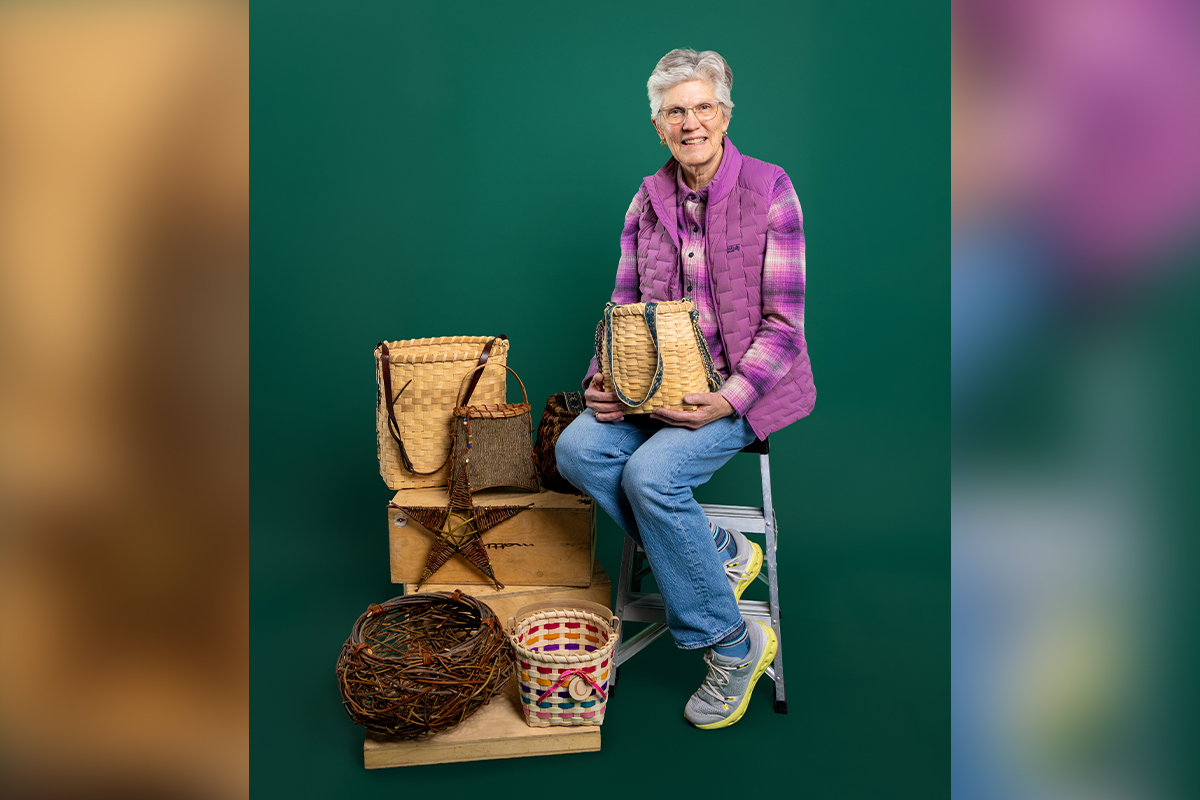
When Vicki Hast walks through the willow patch on her farm each winter, she’s gathering the branches she uses to make baskets — a craft she has practiced and shared with others in the Owensboro area for more than two decades. For Hast, a longtime member of the Owensboro Art Guild, basket weaving is more than a hobby. It is a connection to tradition, nature, and community.
“Just for reference, I am 70 years old,” Hast said. “And I’ve loved art and crafts all my life. But around 25 years ago, I started making baskets.”
What began as a small creative outlet gradually grew into a passion rooted in natural materials and centuries-old techniques.
Hast was introduced to basket weaving through small gatherings hosted by Owensboro resident Liz Ashby, who invited people to her home to learn the basics.
“There was a lady in town, Liz Ashby, and she would have people over to her house and have all the basket-making supplies out and even feed us lunch,” Hast said. “And it just clicked. I just loved it.”
At the time, her children were teenagers with busy social schedules.
“My kids at that age were out maybe on a date or at a football game,” she said. “So it gave me something to focus on while I was waiting up some nights.”
Those early baskets were made from commercial reed, a widely available, uniform material often sold in beginner kits.
“That’s reed that you can purchase. It’s kind of an Asian product. It’s very, very uniform. It comes in all shapes and sizes,” Hast said.
The structured patterns and ready-made materials made the craft approachable, but over time, she became interested in something more traditional. About a decade ago, she discovered willow weaving — a method historically used throughout Europe before plastics, cardboard, and other modern materials replaced handmade containers.
“My focus now is more natural materials and sort of away from the basket that comes with a pattern with perfect pieces,” Hast said.
Willow weaving requires a different relationship with the material. Instead of ordering supplies, the basket maker grows or harvests the branches used in each basket. Hast planted her own willow patch on the couple’s Ohio County farm eight or nine years ago.
“I harvested my willow this year in January, before the big snow came,” Hast said. “I got it harvested and sorted and cut to the lengths that I like.”
Once cut, the rods are carefully stored until they are ready to be woven.
“I keep my willow in the freezer, so that keeps it fresh,” she said. “Then I’m able to pull that out and weave with those long, beautiful rods of willow, just bright as they are.”
Hast’s husband plays a key role in maintaining the materials needed for the craft.
“I couldn’t do any of this without my husband,” she said. “He cultivated my willow for me. He helps me harvest the trees.”
Over time, Hast expanded her work beyond willow and began learning other traditional basket materials used throughout Kentucky and Appalachia. One of those is poplar bark, which has been used in basket making for generations. She has also learned to harvest and weave hickory bark, traditionally used for chair seats.
“You might find an old chair in a flea market or junk shop where the seat is in bad repair, and I can weave a new seat with hickory bark,” Hast said.
Working with natural materials often begins in the woods. For white oak baskets, for example, the work starts with selecting the right tree.
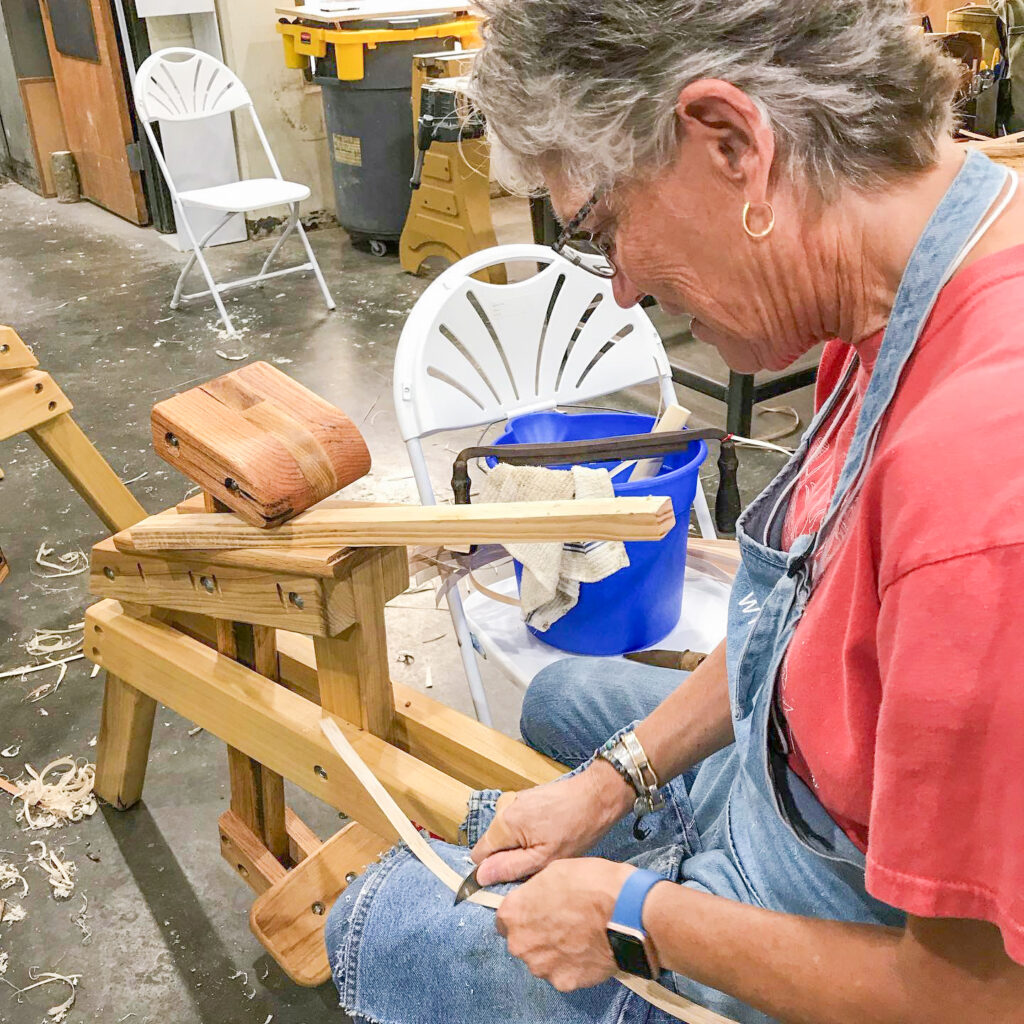
The wood is divided into quarters, then eighths, before being shaved and split along natural growth rings. The process can be physically demanding, especially as the materials must be split and shaped by hand.
“It takes lots of strength,” Hast said. “It’s becoming a little bit more difficult with time.”
But the reward is the connection to tradition and the beauty of handmade craftsmanship.
“It’s the natural materials that I love — the grapevine, the honeysuckle, and other wild vines you find. You can figure out how to weave with them,” Hast said.
Basket making once played an essential role in everyday life. Before cardboard boxes and plastic containers existed, baskets were used to transport nearly everything.
“It’s a very European craft art,” Hast said. “Everything depended on a basket. Everything that was shipped overseas, everything that was carried anywhere was probably in a willow basket at some point.”
Kentucky developed its own strong basket tradition as well, particularly with white oak.
“White oak was really the material of choice around here,” Hast said. “You had to have a basket to harvest your garden, to carry your things to market, to bring things home from the market.”
While baskets are no longer essential household items, Hast believes the craft still resonates with people today.
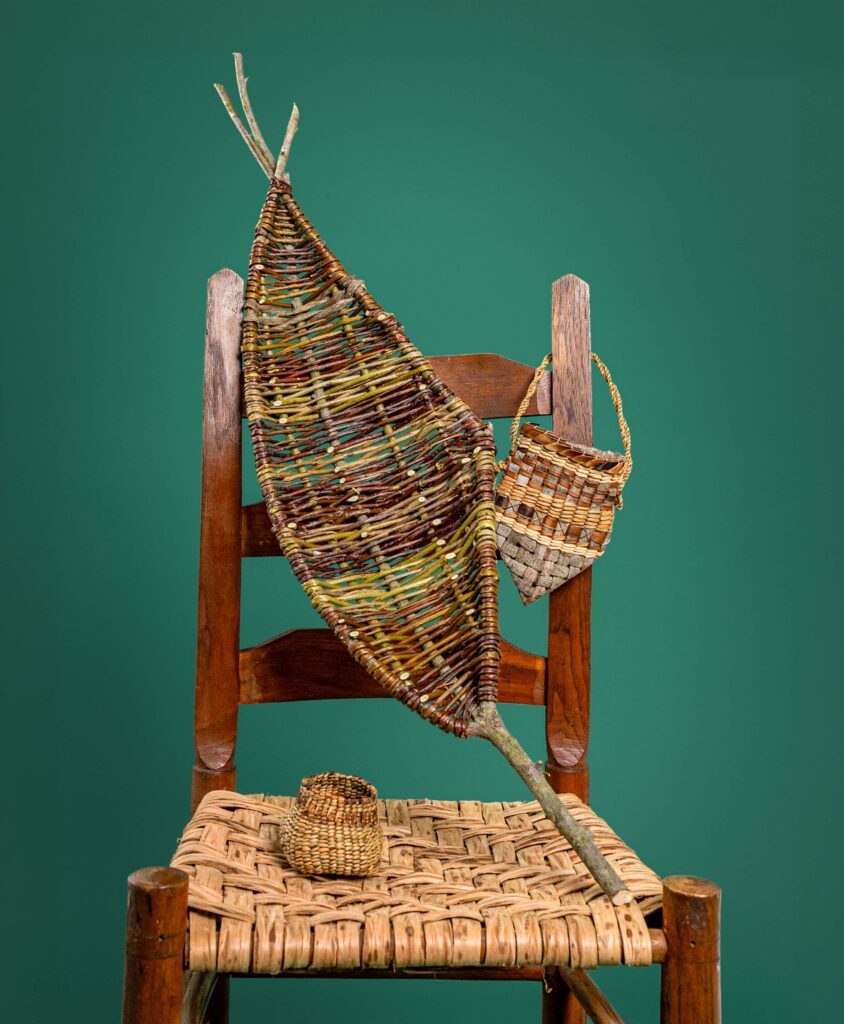
“There’s so much commercial everything now,” she said. “People appreciate having something that’s handmade and special.”
Many of the baskets she creates are sold at local events, including art shows and seasonal markets. She has sold work through events hosted by the Owensboro Art Guild and at local markets, including the holiday market and plant sales at the botanical garden.
“I sell a few,” Hast said. “And I give away a lot. And the really special ones I keep for myself.”
But selling baskets has never been the primary goal. Instead, Hast hopes to help pass the craft on to a new generation of makers. She participates in a regional group called Woven Together in Western Kentucky, a basket guild that hosts gatherings and workshops for people interested in learning the craft. The group recently held a basket retreat at Rough River that drew more than 100 participants.
“There were 18 people that had never woven a basket before,” Hast said.
Many of the beginners start with commercial reed baskets, just as Hast did decades ago. From there, some explore more traditional materials.
Hast has also worked directly with younger weavers who want to learn natural basket making.
“I’ve got several young girls that have come and woven with me,” she said. “I’ve gotten willow patches started with them.”
She has connected with younger artisans across the region who are reviving traditional basket materials. One acquaintance in Somerset has begun a white oak basket apprenticeship program, while another young maker in North Carolina weaves baskets from kudzu, an invasive vine common in the South.
Because of that interest from younger generations, Hast does not believe basket weaving is disappearing. Instead, she sees the craft evolving as people look for ways to reconnect with handmade traditions and the natural world.
“I think young people are so great,” Hast said. “They want a homestead. They want to work on the earth. They want to live from the earth.”
For earlier generations, basket weaving was simply a practical necessity. Today, it is often pursued for creativity, sustainability, and personal fulfillment.
“It was a way of life and something you had to do way back when,” Hast said. “I do it because I love it.”
And as long as there are willow branches to harvest and people willing to learn, Hast plans to keep weaving.
“I just love to share,” she said. “I can do my part with the next generation.” OL