

A family tradition bringing needlepoint to a new generation
Photos by Jamie Plain
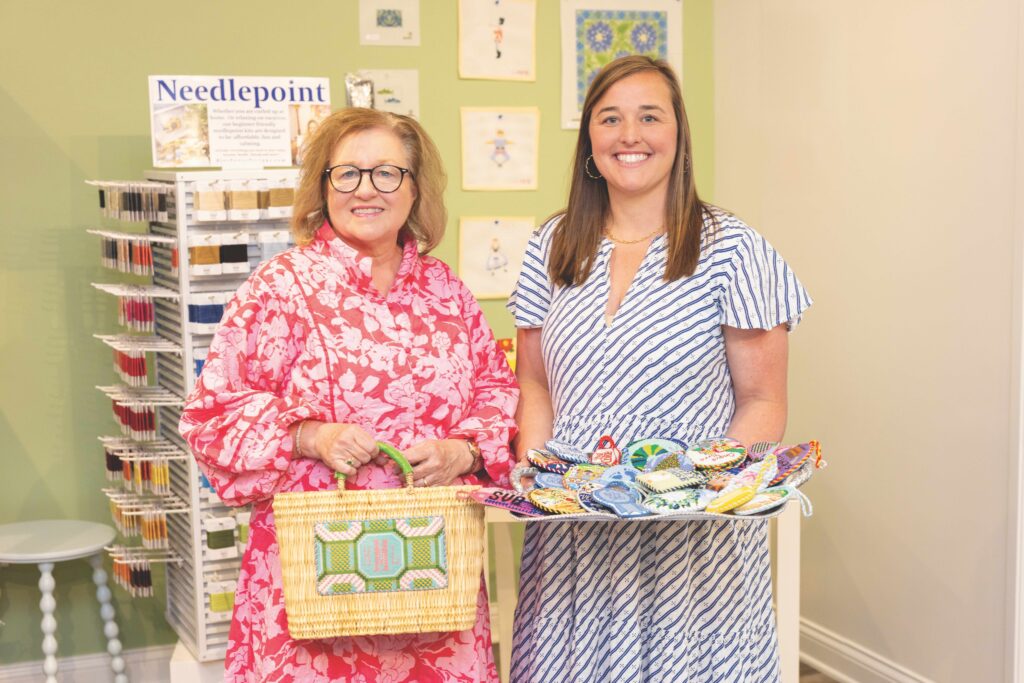
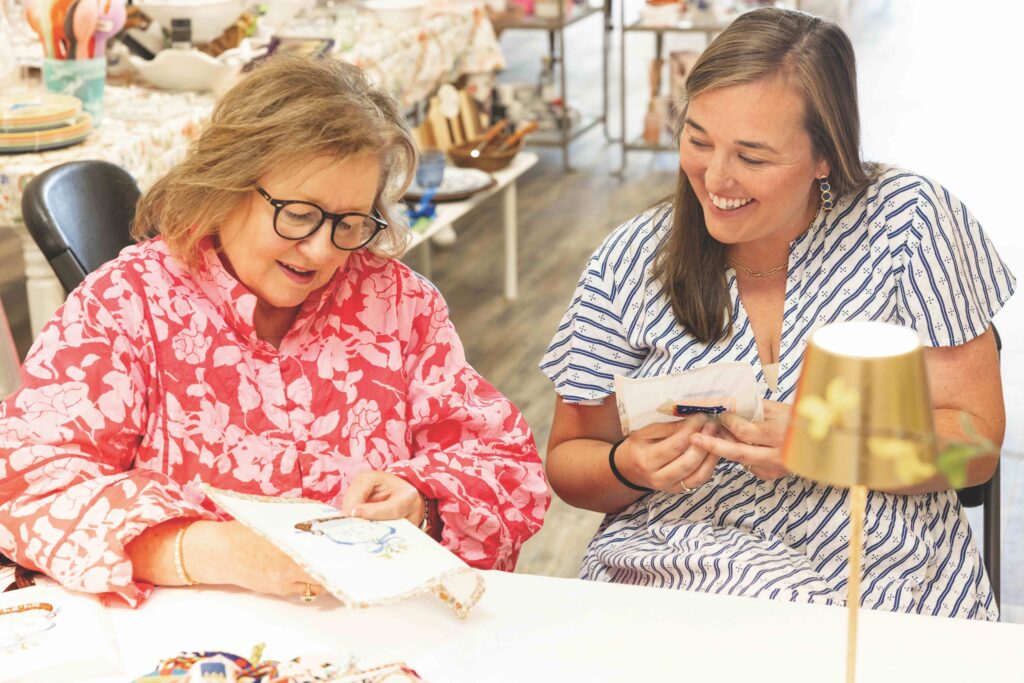
Kelly Moore and her daughter Kendall Jagoe can trace years of family memories through needle and thread.
There are belts stitched for fathers and grandfathers, ornaments marking birthdays and family milestones, and travel keepsakes inspired by places visited along the way. Needlepoint has passed from Moore to her Jagoe and is now reaching a third generation through the ornaments they create for Moore’s grandchildren.
These days, the Owensboro mother-daughter pair is sharing the tradition beyond their own family. Through beginner classes and community stitch nights at Julep Home & Gift, Moore and Jagoe are introducing newcomers to a centuries-old craft that has found new enthusiasts.
For Moore, that connection to needlepoint dates back to her college days at the University of Kentucky in the mid-1980s.
“I started in college when everyone was making needlepoint belts and key fobs,” Moore said. “I had a little sheet of paper that showed me how to do one stitch, and I basically taught myself from there.”
Although she stitched on and off over the years, life eventually became busy enough that the hobby faded into the background. That changed about a year and a half ago, when her daughter encouraged her to pick it back up.
Jagoe’s own introduction to needlepoint came much earlier.
“My mom taught me when I was in late elementary school or early middle school,” Jagoe said. “We were out of town somewhere, and she bought me a little kid’s kit. That’s how I got started.”
Like many young stitchers at the time, Jagoe quickly found herself making belts for family members.
“I made belts for my dad, my granddad, and pretty much anybody who wanted one,” she said with a laugh. “I also made a bunch of keychains.”
As styles changed, so did her projects.
“A few years ago, I started making ornaments because I don’t really wear belts anymore, and everybody I knew already had one,” she said. “Now I make a ton of ornaments.”
Those ornaments have become the projects both women enjoy most.
“I really like ornaments because you get that instant gratification,” Moore said. “They’re fairly quick to finish, and once you complete one, it makes you want to start another.”
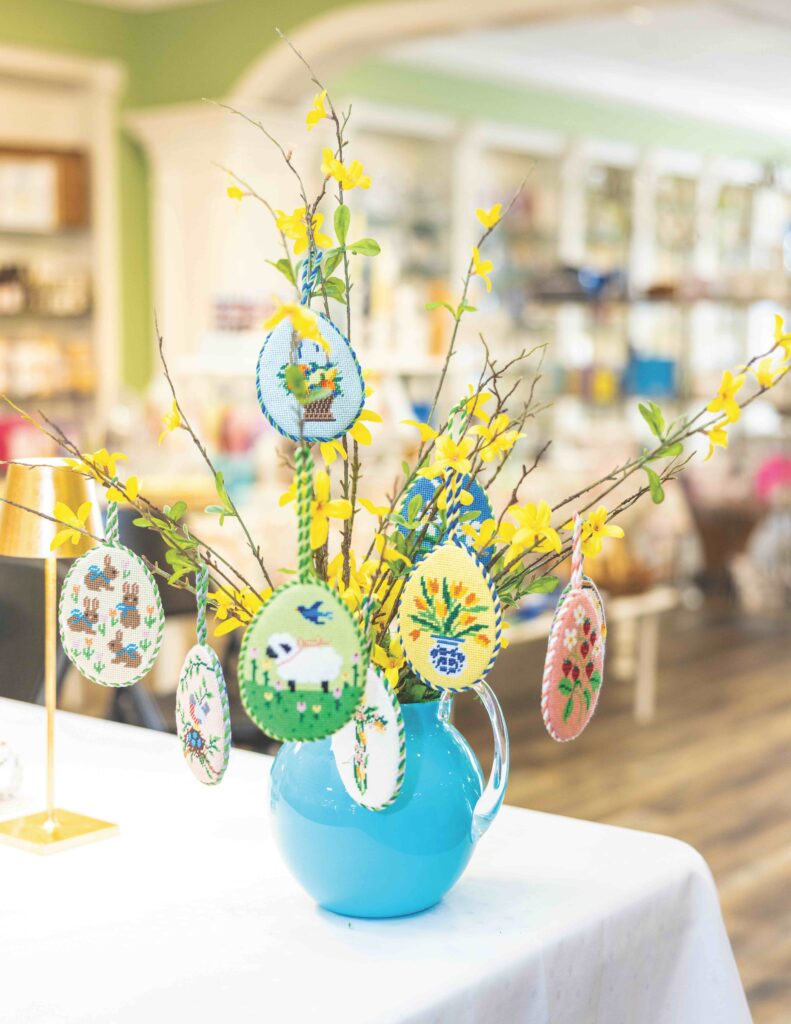
While Christmas ornaments remain popular, the pair has expanded well beyond holiday decorations.
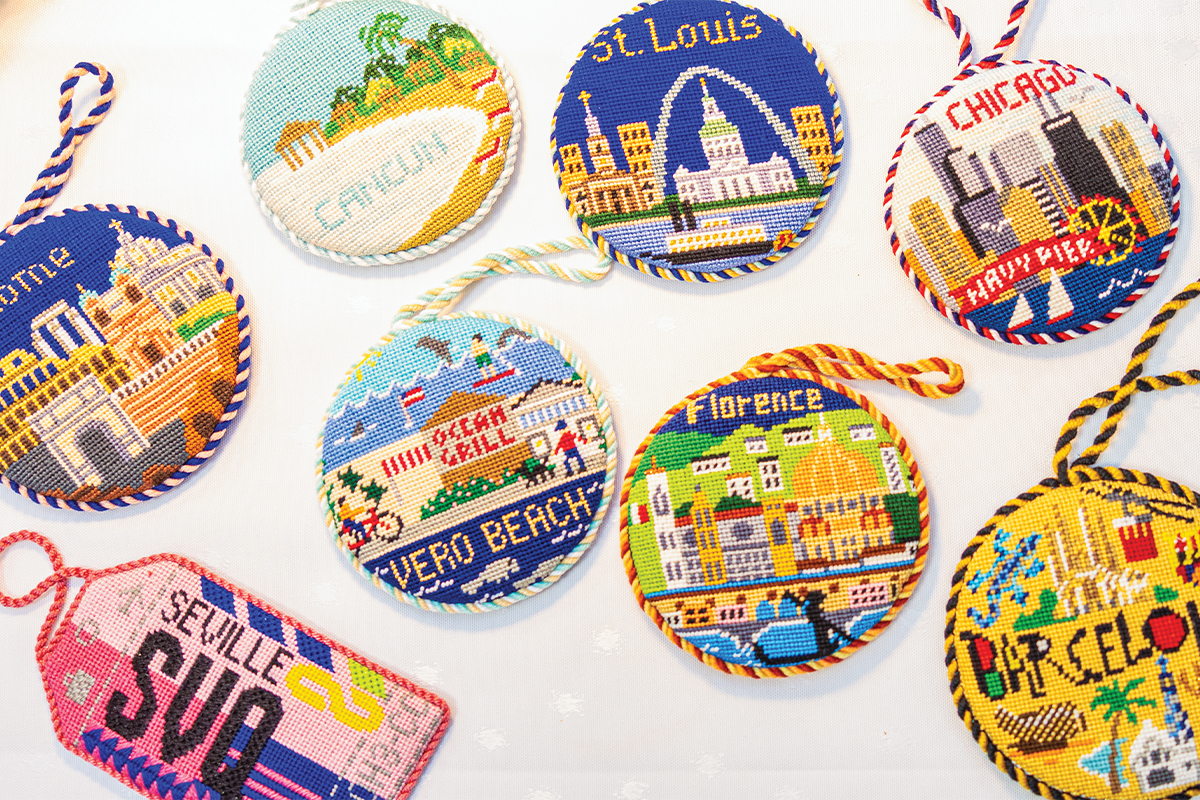
Jagoe and her husband enjoy traveling, so she creates a new ornament for every city they visit. She also stitches keepsakes to commemorate the birth of family members and makes one ornament for each of her two sons every year based on a favorite interest or milestone.
“For each of my boys’ birthdays, I make them an ornament that reflects something from that year of their life,” Jagoe said. “It might be their birthday theme or something they were really into that year. It’s a way to remember those moments.”
Moore has set a similar goal for herself.
“My goal this year is to make one ornament every year for each of my four grandchildren,” she said.
She’s also branching into larger projects, including a hand-stitched Christmas village featuring freestanding storefronts and buildings that can be displayed on a mantel or tabletop.
Despite its reputation as a traditional craft, both women say today’s needlepoint world looks much different than it did decades ago.
“I think it kind of ebbs and flows,” Moore said of the hobby’s popularity. “But since COVID, there’s been a huge uptick in the number of people stitching.”
She believes part of that renewed interest comes from changing designs.
“Years ago, people thought of needlepoint as something their grandmother did,” Moore said. “Now there are so many fresh, modern designs that appeal to younger people. There’s really something for everyone.”
Jagoe has also watched the industry evolve online.
“Before COVID, most needlepoint stores didn’t have well-developed websites,” she said. “You almost had to go into a store to see what they had.”
As demand increased, retailers adapted.
“Now it’s everywhere online,” Jagoe said. “You can browse, order supplies and discover new designers much more easily than you could before.”
Ironically, growing demand has also made many supplies harder to find.
“That is such an accurate statement,” Moore said. “There really is a shortage.”
She explained that much of the needlepoint canvas used throughout the industry is manufactured in Germany, while many canvases are individually hand-painted before reaching customers. Thread shortages have added another layer of delays.
“If you see a canvas you love, buy it,” Moore said. “Even if you can’t stitch it right away, you might not be able to find it again for a year.”
Having a variety of projects waiting also allows stitchers to match their mood, she said.
“Sometimes I want to work on a Christmas ornament. Sometimes I want a larger project,” Moore said. “Sometimes I need what I call a palate cleanser before I go back to something with really tiny holes and lots of detail.”
For Jagoe, however, the greatest value of needlepoint has little to do with the finished product.
“I’m a teacher, and teaching is a very stressful job,” she said. “Needlepoint helps me get my brain off everything else.”
Unlike many hobbies that require constant decision-making, stitching offers a welcome mental break.
“It takes very little thought, and that’s what makes it so relaxing,” Jagoe said. “It’s how I unwind at the end of the day.”
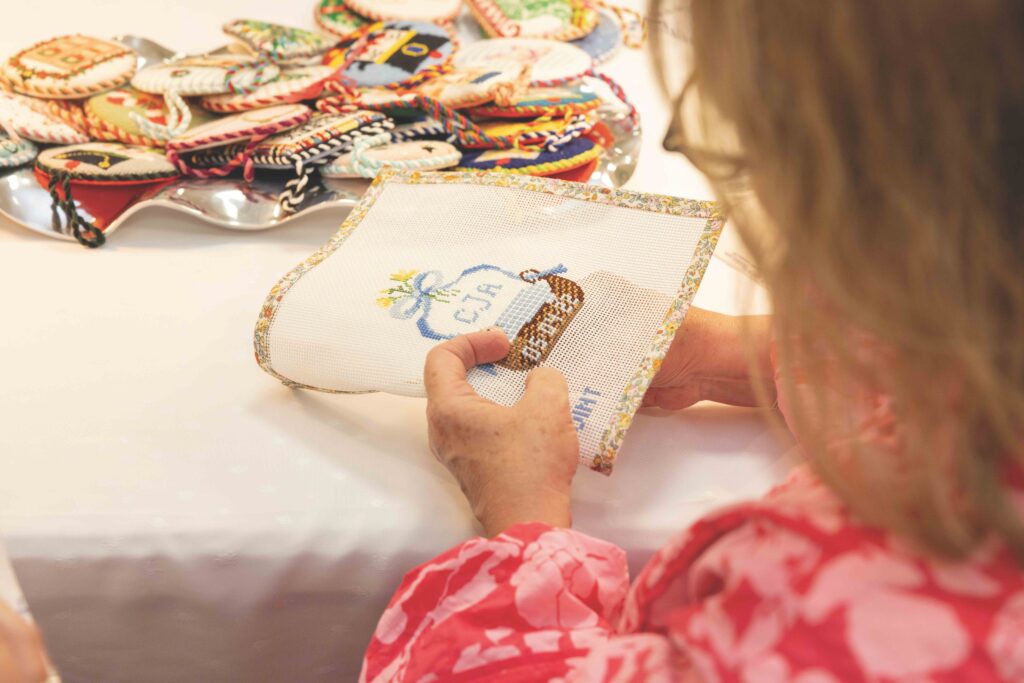
Now the pair hopes to introduce that same sense of calm and creativity to others through classes at Julep Home & Gift. They’ve already taught two beginner classes and hosted open stitch nights, with more planned throughout the coming months as Julep expands its selection of supplies.
The beginner sessions use complete kits that include everything newcomers need, from the canvas and thread to scissors and needles. Open stitch nights are designed for beginners and experienced stitchers alike.
“People can bring whatever they’re working on,” Moore said. “Maybe they came to one of our beginner classes and just need a little help finishing their project, or maybe they have questions about a stitch they’re trying.”
Even experienced stitchers benefit from the collaboration.
“You might ask, ‘What decorative stitch would you use here?’ or ‘What do you think about this color?’” Moore said. “It’s fun to bounce ideas off other people.”
Although needlepoint is often thought of as a solitary hobby, Jagoe believes the community surrounding it has become one of its greatest strengths.
“It can absolutely be something you do by yourself,” she said. “But having stitch nights creates this little community. You get together with people who enjoy the same thing, and that makes it even more fun.”
The classes also fill a longstanding gap for local stitchers.
“For years, Owensboro hasn’t had a needlepoint store,” Moore said. “You had to travel to buy supplies.”
With Julep expanding its inventory, she hopes local enthusiasts — and curious beginners — will have a place to learn, shop, and connect without leaving town.
“We know there are tons of people in Owensboro who already needlepoint,” Moore said. “Having a local place to buy supplies and spend time stitching together is really exciting.”
For Moore and Jagoe, the craft has always been about more than thread and canvas.
It has preserved family memories, documented travels, marked birthdays, and created a tradition passed from one generation to the next. Now, through classes and community gatherings, they’re hoping to help others discover that the slow, deliberate rhythm of a needle and thread can still bring people together — one stitch at a time. OL