

An Owensboro craftsman’s lifelong pursuit of beauty
Photos by Jamie Plain
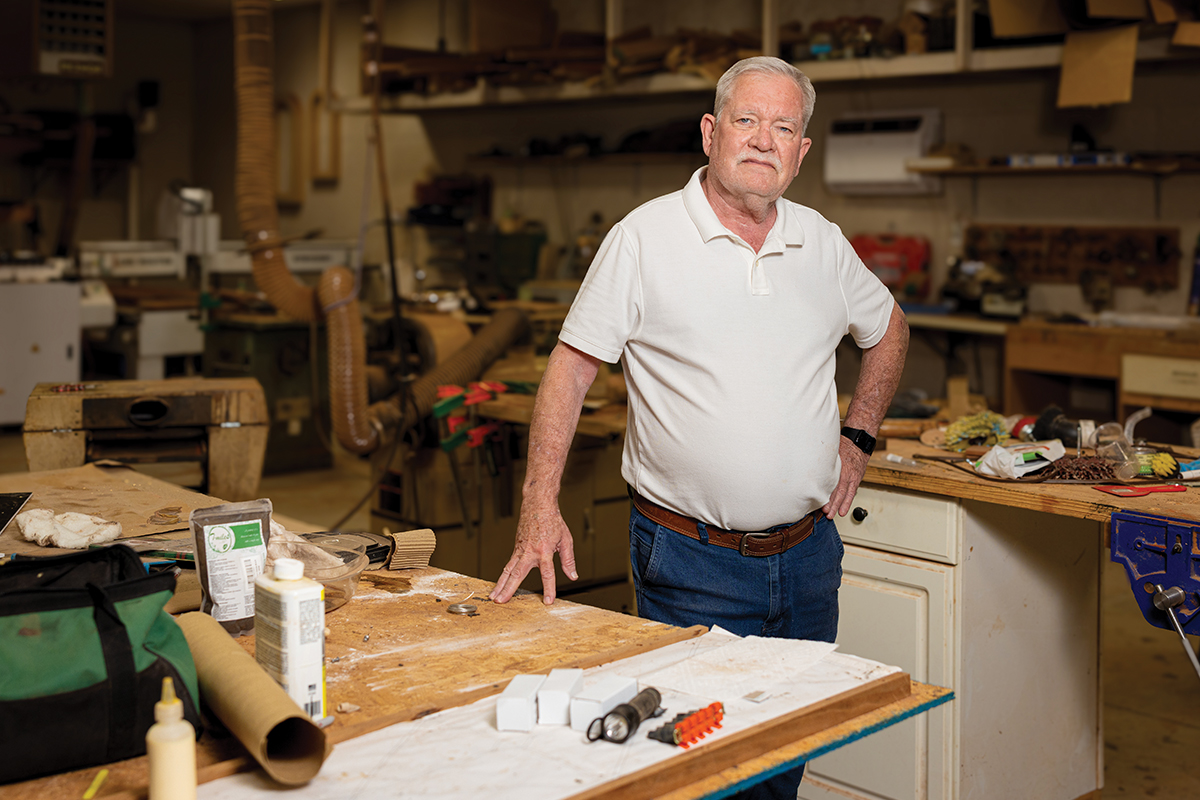
For some, retirement is a season for rest. For Owensboro artist and craftsman Jim Barr, it is simply the next phase of a lifelong calling to build.
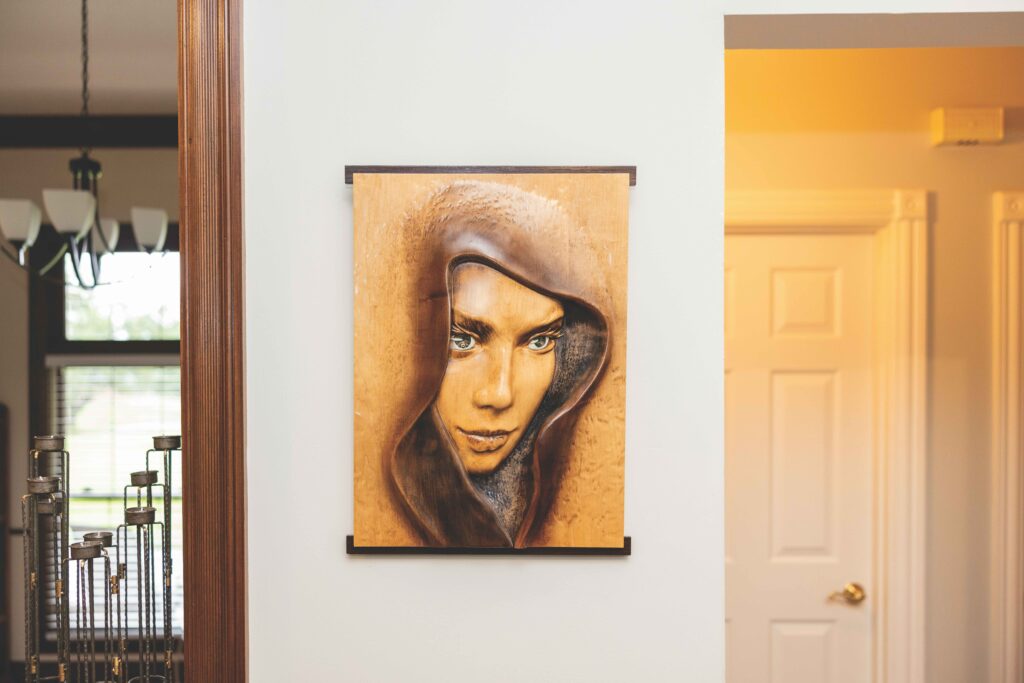
After stepping away from a decades-long career in construction and woodworking in 2019, the former president of the Owensboro Art Guild found a new way to channel a lifetime of experience. Today, Barr merges traditional craftsmanship with cutting-edge technology to create intricate wood relief sculptures, a process that serves as the latest chapter in a unique journey blending art, theology, and construction.
“Someone once asked me for a word that captures what I am; the word I chose was builder,” Barr said. “In every role, my instinct has been the same: gather the skills, the materials, and the methods needed for the task and join them together in a way that is appropriate for the task. Joinery has always been the heart of the work.”
Raised in a family of homebuilders, Barr was working alongside his father by age 11. Despite this deep immersion in labor, a creative spark wasn’t truly ignited until he enrolled at Brescia University. An advisor placed Barr, who at the time had not declared a major, into a Design 101 class, a pivotal moment that altered his perspective forever.
“That class changed me forever,” he recalled. “It made me think differently about what my eyes saw and awakened a creative instinct that I had not fully recognized.”
At Brescia, two faculty mentors recognized the student’s unique background. Rather than forcing a conventional approach to traditional mediums like ceramics or drawing, they encouraged the burgeoning artist to create using the structural skills that came most naturally.
This foundation in design eventually intersected with faith. Raised Catholic, Barr later earned a master’s degree in theology and spent five years in pastoral ministry before returning to the construction industry. His theological studies deeply influenced his worldview, shaping how he viewed the act of making.
“My own study of theology has strengthened my conviction that creation is not a completed act. God is never finished,” Barr said. “Creativity is not the privilege of the religious; it is the signature of being alive. I view every creative act as a participation in God’s will that we continue to create and recreate our world.”
Throughout a career building everything from custom cabinetry to liturgical furnishings for churches, the boundary between labor and fine art naturally blurred. Design 101 had taught that proportion, color, and composition were tangible disciplines. Woodworking proved that the execution of those elements carried profound meaning.
“Good joinery doesn’t just bind materials; it binds ideas, and sometimes even binds people,” Barr said. “When it’s done well, there is beauty and integrity. When it’s done poorly, there is collapse. That realization, that the quality of the making shapes the meaning of the thing, is when craftsmanship became, for me, a form of art.”
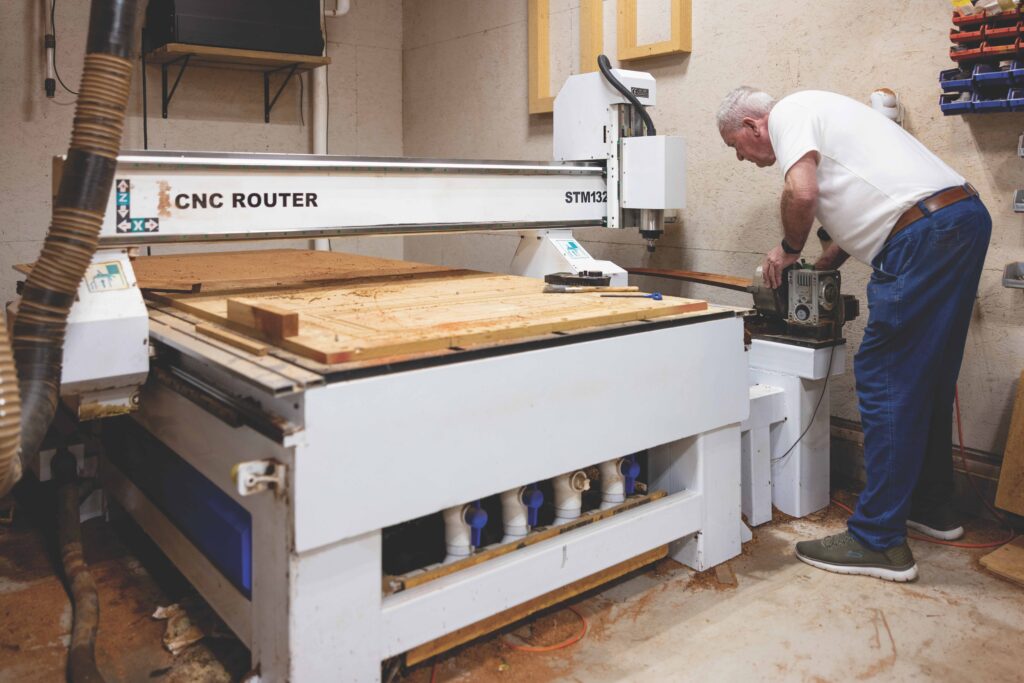
Faced with physical limitations that come with age, retirement prompted a transition from building large-scale structures to creating smaller, detailed art. With a shop full of traditional woodworking tools, Barr decided to tackle a new challenge: sculpting software and Computer Numerical Control (CNC) machinery.
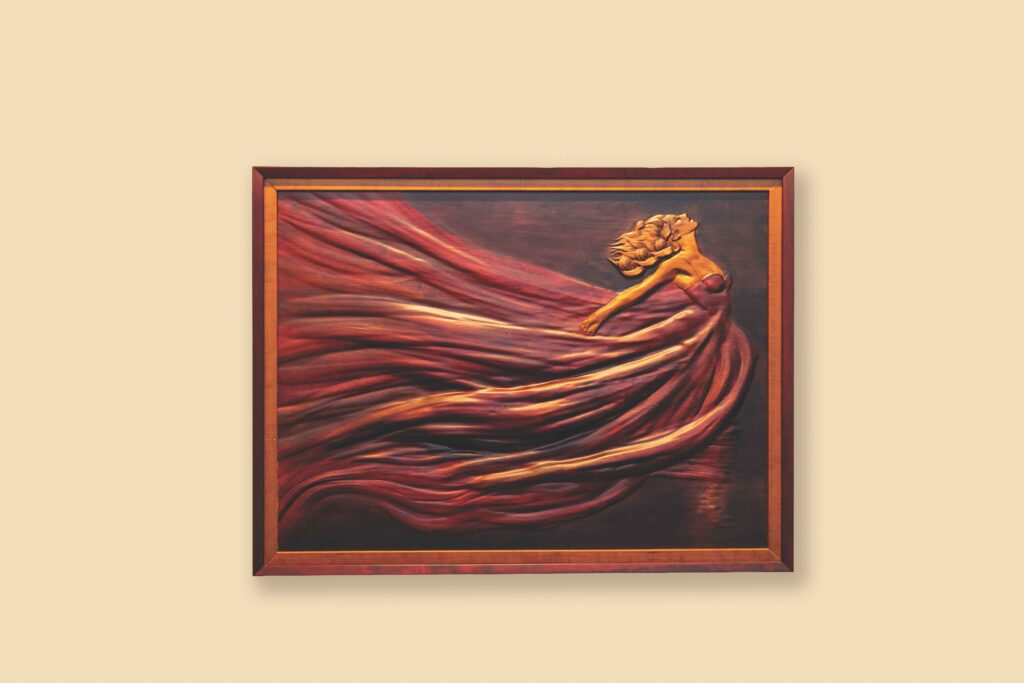
While traditional relief sculpture dates back at least three millennia, Barr uses the tools of the modern era. The process begins on a computer, utilizing software to design a three-dimensional model. From there, another program generates the complex code required to operate a CNC router, which moves a cutting bit along precise width, depth, and height coordinates.
The process is grueling. A single medium-sized relief sculpture can require up to 4 million lines of code and take more than 12 hours for the machine to carve. But the technology is only a starting point. Barr then spends subsequent hours hand-carving hard-to-reach areas, sanding, applying color, sealing, and framing. A single piece often takes several months to complete.
The final products frequently explore human emotion, particularly through faces and forms, which invite viewers to project their own stories onto the work. Over the years, Barr’s creations have ranged from personal family pieces, such as a 25-year-old kitchen table bearing a sentimental acetone blemish left by a daughter, to a massive, custom-built library centerpiece for a former graduate professor in New Orleans, featuring elegant “tabernacle” doors designed to house sacred texts.
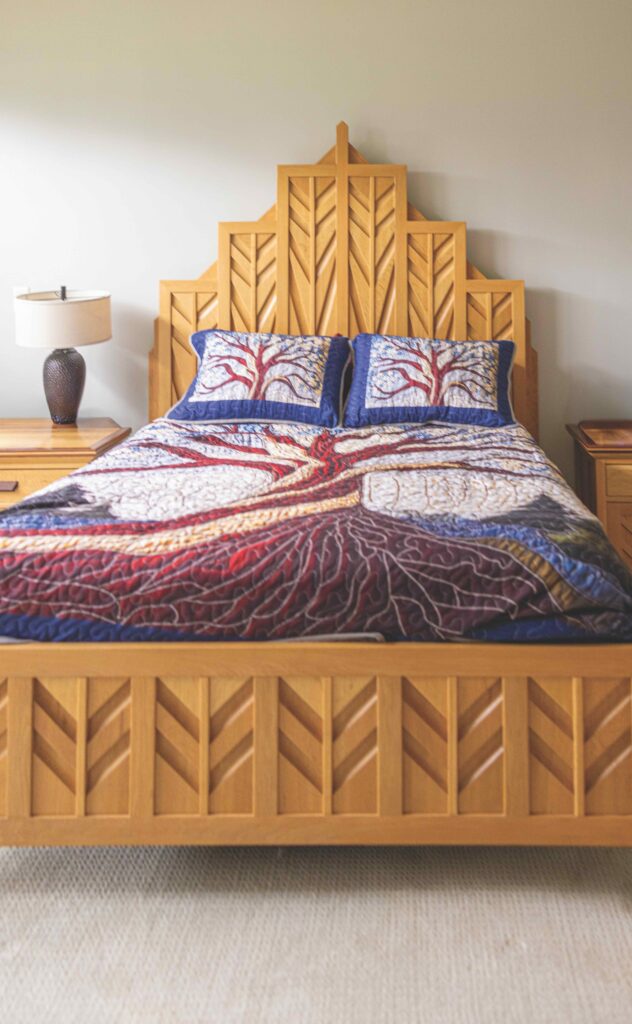
As a prominent figure in the local arts scene, Barr recently wrapped up a third year as president of the Owensboro Art Guild. The organization, which recently celebrated its longevity with the Governor’s Award for Community Service, works in tandem with the Owensboro Museum of Fine Art to foster a thriving local culture.
“I believe that any community that is thriving and growing will honor and treasure the arts community,” Barr said, pointing to Owensboro’s public art installations, growing museum, and vibrant music festivals.
For younger generations trying to find their creative voice, Barr echoes advice from Owensboro Museum of Fine Art Director Jason Hayden, reminding them that everything from clothing to architecture bears the mark of a creative mind. The key, he says, is to master skills across multiple mediums.
As for his own legacy, Barr remains content letting the quality of the work speak for itself, leaving the deeper interpretations to the viewer.
“Having been a craftsman all my life, I am happy if they notice an excellence in my craftsmanship,” he said. “Anything else is grace.” OL