

Coomes’ Journey From Skiing on the Ohio River to a National Championship
Photos by Jamie Plain
Pat Coomes did not take the traditional path to becoming a competitive water skier. He grew up on a farm, started a family young, and spent more than four decades building a career in industrial painting. Water skiing began simply as family recreation on the Ohio River near Stanley, Kentucky.
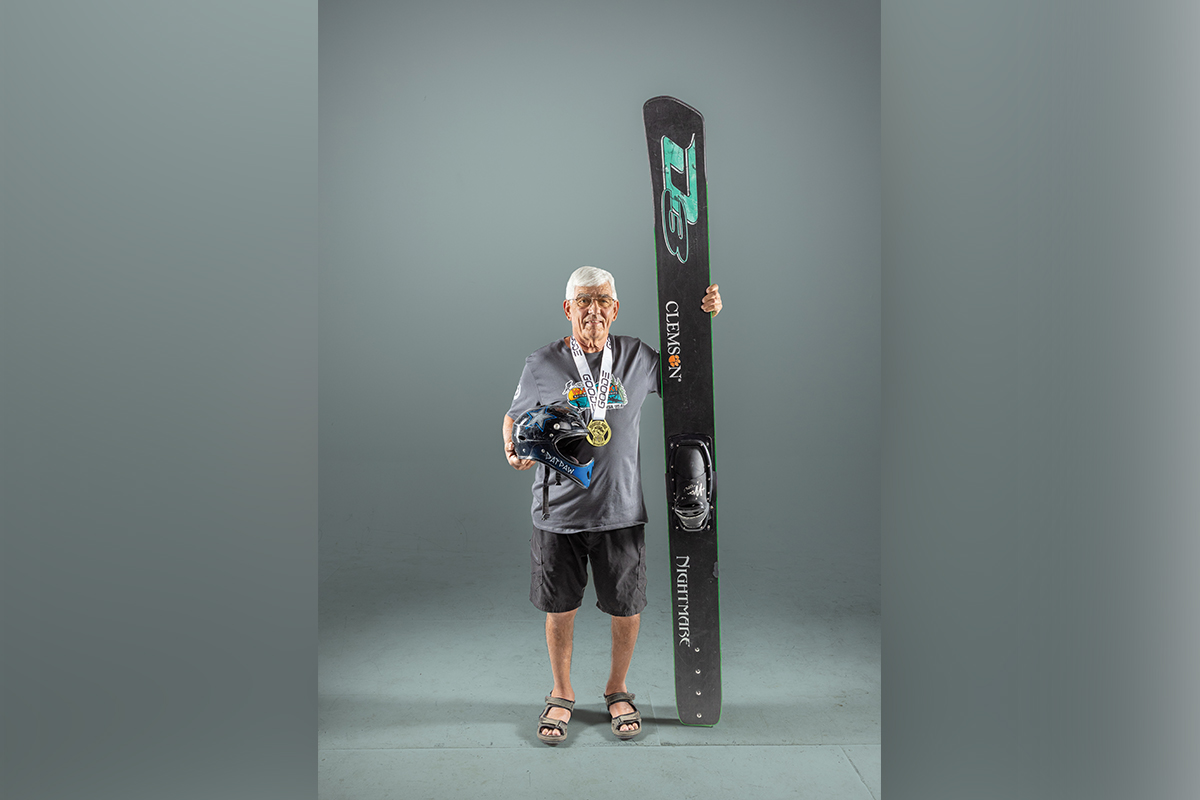
At 73, Coomes recently won the Men’s 8 jump title at the 2026 Goode Water Ski National Championships in Center City, Minnesota. His 55-foot jump on his third and final attempt edged the second-place competitor by one foot, securing his second consecutive national championship in the event.
The victory marked another milestone in a journey that began with family outings on the Ohio River.
Learning to Fly
Coomes’ introduction to the sport came from his uncle, Jerry Jones, who first taught Coomes how to ski behind his boat. Coomes and his brothers spent years skiing and boating with their family on the Ohio River.
For a while, they thought they were pretty good.
“We thought we were pretty hot-shot skiers out on the Ohio River, at least on our little stretch of the river, which was about a mile long,” Coomes said. “We were the best two or three water skiers on that stretch.”
Then Coomes decided to see how he compared with other skiers.
About 35 years ago, he entered a novice tournament at Kentucky Lake Ski Nuts in Paducah. The competition introduced him to tournament skiing and to people who were taking the sport much more seriously.
It also gave him his first opportunity to go over a water ski jump.
“I had seen a water ski jump before, but I’d never been over one,” Coomes said. “They let me go over a water ski jump, and that really excited me. It was a thrill to be in the air before landing on the water. It was like, ‘Wow, I didn’t know I could fly.’”
From there, Coomes gradually became more involved in competitive skiing. His path was unusual because he was already well into adulthood. Most of the people he eventually competed against had started skiing as children.
“Some of them started when they were less than 10 years old, and some started as teenagers,” he said.
Balancing Work and Water
Coomes was building his skiing career while also maintaining a demanding professional life.
He entered the industrial painting industry after marrying young and starting a family. His wife’s uncle helped him get a job with a painting company, where Coomes began as an apprentice. Over the years, he worked his way through nearly every position in the company — journeyman, foreman, general foreman, estimator, and eventually general manager.
“I basically did everything for that company that you could do, except own it,” Coomes said.
For roughly the last 20 years of his career, Coomes served as general manager. His work took him to power plants, water towers, smokestacks, bridges, aluminum companies, oil refineries, and chemical plants throughout the Ohio River Valley.
Balancing that career with competitive skiing required Coomes to make the most of his free time. He said he didn’t have as much time to develop his skiing skills as he might have liked.
“I essentially became a weekend warrior when it came to water skiing,” he said. “I worked a full-time job, and then on weekends during the summer months, I would practice, work on a ski jump, or go skiing. I really and truly didn’t spend enough time developing my water skiing skills.”
Still, the schedule worked. Coomes followed the same philosophy his parents had taught him growing up: responsibilities came before recreation.
“My parents taught me that you can’t play until you get your work done,” he said. “We used to work really hard so that we could play even harder.”
Finding His Place on the Podium
As his experience grew, so did his success.
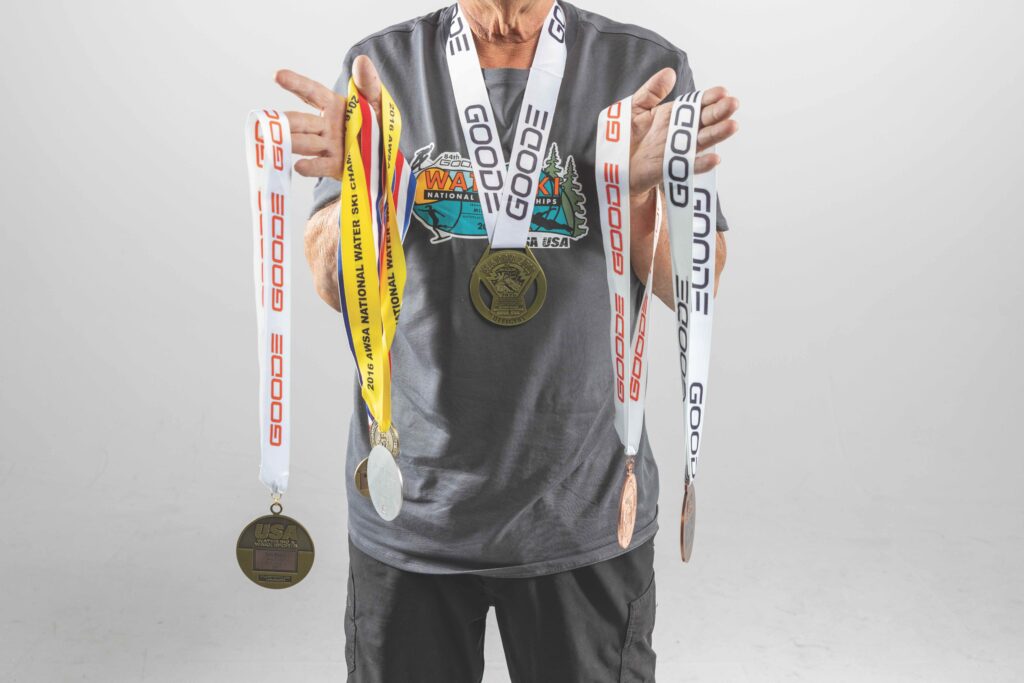
About 10 or 15 years ago, Coomes began regularly reaching the podium at major regional and national events. He said he would finish third, fourth, or fifth in competitions where the top five were recognized.
Over time, the competitive field around him changed. Some of the athletes who had been competing at a high level for years began stepping away because of injuries, changing interests, or the physical demands of the sport.
Coomes continued.
“The better athletes seemed to get injured, lose interest, or find that their bodies didn’t hold up as well as mine because they started so young,” he said. “My physical fitness allowed me to continue competing at a level where many of them eventually had to step away because of an injury or something else.”
His involvement in the sport also extended beyond competing. Coomes became a judge and boat driver, while his wife became a scorer. She also traveled with him to most of his competitions, making water skiing something the couple participated in together.
His family supported the commitment as well.
“I’ve got a really close family that understood the sacrifices involved, and they cheered me on,” Coomes said. “For the most part, they were very supportive.”
That support extended to his professional life.
Coomes’ employer gave him the flexibility to take time away from work for competitions and travel. Even after retiring as general manager, he continued doing some work in the painting industry on a part-time basis. His experience and professional relationships had become valuable enough that customers sometimes called him directly rather than contacting the office.
The company’s owner eventually gave Coomes the freedom to work when needed rather than maintain a traditional schedule.
Coomes recalled the owner telling him, “‘I don’t care how much you work or how much you don’t. I know your work ethic, Pat. You’ve worked for me for more than 40 years, and if there’s work here that needs to be done, I know you’ll be here doing it. If not, you don’t need to be here.’”
More Than the Medals
That flexibility allowed Coomes to continue working while traveling for competitions. But the travel itself became one of the most valuable parts of skiing. Competing took Coomes beyond the community where he grew up and introduced him to people from across the country.
“My travels and the people I’ve met have broadened my horizons,” he said. “I was able to see a much bigger world than the small community I grew up in.”
Every competition brought a new venue and new people.
“Every trip, every venue, and every person I’ve met has broadened my horizons,” Coomes said.
That perspective has become especially meaningful as Coomes has watched longtime competitors leave the sport. While looking through old photographs recently, he saw pictures of people who had once shared the podium with him. Many of them are no longer competing.
Coomes reached out to a group of them and reflected on how much had changed.
“I told them, ‘This was nine years ago, and this year I’m on top of the podium,’” he said. “But what I miss most are the people who are no longer participating.”
For Coomes, the rewards of water skiing reach beyond the podium. The sport has taken him farther than he imagined during those early days on the Ohio River, but the friendships give those travels their lasting meaning. As he continues competing, he carries an appreciation for both the people still beside him and those he misses seeing on the water. OL