

Owensboro’s great summer gathering
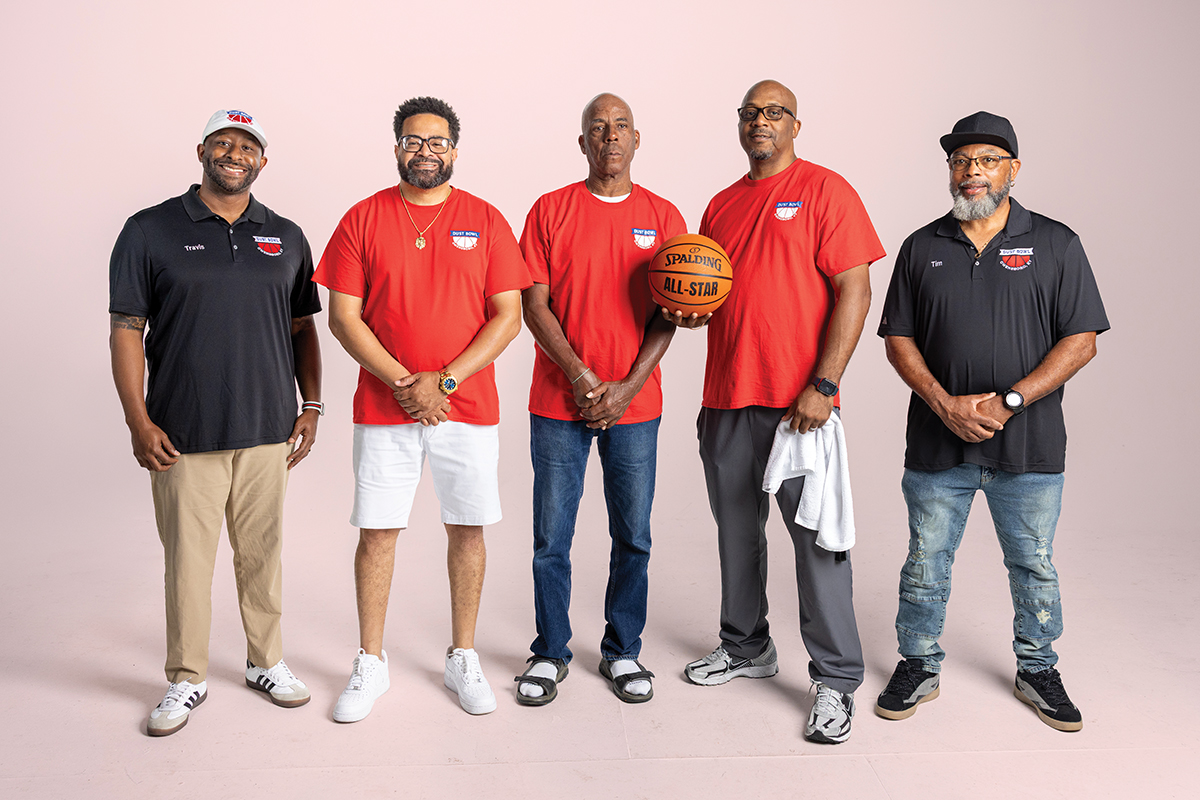
Photo by Jamie Plain
For more than five decades, the sounds of bouncing basketballs, the smells of barbecue, laughter, music, and neighborhood conversation have echoed through Kendall-Perkins Park.
Every July, as the summer heat settles over Owensboro’s west side, generations gather around an asphalt court that has become one of the city’s most enduring traditions. Grandparents who once played in the tournament sit beside children making their first trip to the Dust Bowl. Former champions return to watch the next generation chase the same dream.
The Owensboro Dust Bowl has never been just a basketball tournament. It is a reunion, a neighborhood celebration, a living piece of Owensboro history.
And after more than 50 years, its organizers believe the tournament’s best days may still be ahead.
A SIMPLE IDEA BECOMES A TRADITION
The Dust Bowl traces its roots to 1974, when three men — Jerry Davenport, Gus Johnson, and Felix Thruston — began discussing a problem they saw in Owensboro’s Black community.
There were few organized recreational opportunities for young people on the city’s west side.
Johnson had recently graduated from Kentucky State University and was working through the city’s summer jobs program. Davenport worked for Owensboro Parks and Recreation. The group began talking about ways to create something meaningful.
“We were just sitting around one afternoon talking about the fact that there wasn’t much to do,” Johnson recalled.
At the time, basketball enthusiasts across Kentucky were familiar with Louisville’s famous Dirt Bowl tournament at Shawnee Park. The trio wondered why Owensboro couldn’t create something similar.
The idea was ambitious. They had no budget, no equipment, no insurance, and little experience running a large tournament. What they did have were relationships.
The group approached David Kelly, Owensboro’s first African-American executive in City Hall, who helped them pitch the concept to then-Mayor C. Waitman Taylor. The city resurfaced the court at Kendall-Perkins Park, and organizers borrowed equipment, secured basketballs and scorebooks, and started recruiting players.
Word spread the old-fashioned way. Organizers traveled throughout western Kentucky and southern Indiana, stopping in places like Central City, Madisonville, Henderson, and Evansville to tell people about the new tournament. The response exceeded expectations.
“Owensboro is a basketball town,” Johnson said. “Historically, people love basketball. The local basketball players are local heroes.”
What started as a neighborhood project quickly became something much larger.
BASKETBALL BRINGS PEOPLE TOGETHER
Those involved in the tournament’s earliest years often point to one factor behind its success.
Basketball had a unique ability to unite people who otherwise might not interact.
“Basketball was about the only thing that brought everybody together,” Johnson said. “There were different neighborhoods; that was just the way it was. But basketball transcended all of that.”
That spirit remains one of the tournament’s defining characteristics.
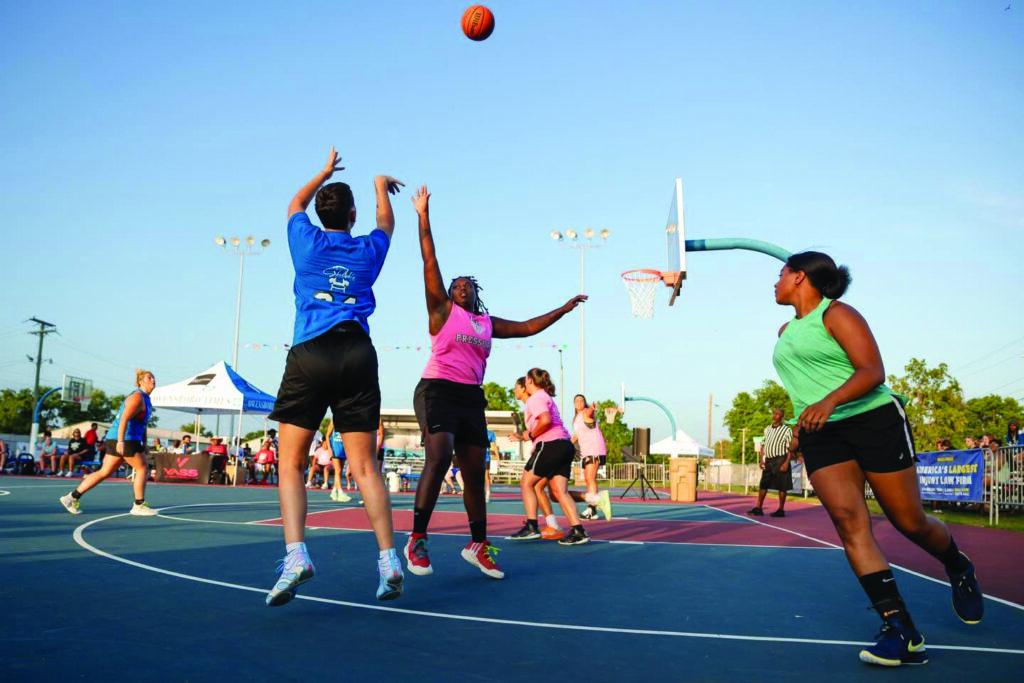
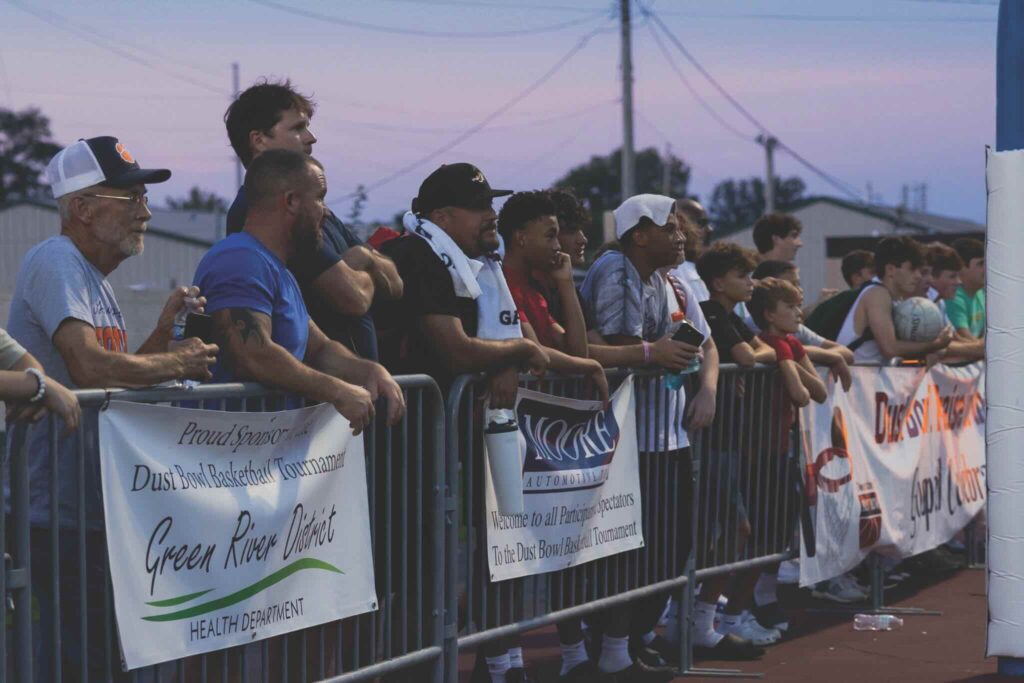
Over the years, Dust Bowl games have attracted people from every corner of Owensboro and beyond. Families bring lawn chairs. Friends reconnect. Children run around the park while adults reminisce about past tournaments.
Former tournament director Byron Owen said the event has always belonged to the community.
“Only you can make it happen,” Owen wrote in a farewell letter after stepping away from leadership. “I want to thank my family, friends, classmates, supporters, advertisers, fans, players, coaches, officials, staff, vendors, volunteers, and committee and board members.”
Othello Millan, who played in the inaugural tournament before becoming a coach and volunteer, said the community’s ownership of the event is what has sustained it.
“It’s more or less the people in the community,” Millan said. “It’s something to get everybody together.”
Larry Owen, another longtime organizer and volunteer, believes few events in Owensboro rival the Dust Bowl’s ability to connect people.
“It brings people together,” he said. “It’s one of the most diverse events in our city. You get to meet people you don’t see every day in a relaxed and entertaining atmosphere.”
WHERE LEGENDS PLAYED
While community has always been the heart of the Dust Bowl, elite basketball talent has helped fuel its reputation.
Winning a Dust Bowl championship has never come easily.
Over the years, the tournament has featured future NBA players, Kentucky Mr. Basketball winners, collegiate stars, and some of the best playground players in the region.
Among the most recognizable names to compete at Kendall-Perkins Park are former NBA players Rex Chapman, Darrell Griffith, Milt Wagner, Chris Whitney, and several others who went on to successful collegiate and professional careers.
Larry Owen remembers helping connect a young Chapman with organized basketball opportunities before the future Kentucky Wildcats star became a household name.
“A lot of times, Wayne would just drop Rex at our house, and we would walk over to Dugan Best for practice,” Owen said. “That’s how he started playing with these guys.”
The Dust Bowl also became known for assembling star-studded teams. Former Owensboro High School standout Marcus Robinson still remembers one powerhouse roster assembled by Byron Owen during the 1980s.
“(Byron) put a super team together,” Robinson said. “It was Avery Taylor, Rex Chapman, David Hogg, Maurice White, Scott Johnson, Orlando Stuart, Anthony Leachman, Jay Woodard, James Douglas, Bobby Higgs. He had the best talent to come through here in years.”
Yet some of the tournament’s most memorable stories involve local teams that never won championships. Larry Owen still remembers a group of players from Whitesville who routinely made the trip into Owensboro to compete. Research points to the Mattingly brothers leading teams largely made up of Trinity Raiders players.
“They never won it, but the little Whitesville community would show up in droves,” Owen said. “No matter who they played, they gave them fits.”
That same spirit remains visible today.
A HOMECOMING UNLIKE ANY OTHER
For many players, the Dust Bowl becomes even more meaningful after they leave Owensboro.
Former Apollo standout Michael James played high-level basketball across the country and around the world. Yet he says few experiences compare to returning home for the Dust Bowl.
“It’s your family, your peers, the atmosphere, the music, the smell, the fact that you’re home and the lights are bright,” James said. “You’re at Kendall-Perkins Park, and the lights come on, and you see your mom, brother, dad, and little kids sitting on the sideline.”
James describes the tournament as a yearly homecoming. No matter where life takes players, many find themselves returning to the same court where they first built their reputations.
One of James’ favorite moments came during a championship game when Lamar Owen stood at the free-throw line with less than a second remaining and his team trailing by two.
James told him to intentionally miss left. The rebound bounced perfectly. James tipped it in at the buzzer. The game went to overtime. They won the championship.
Those moments have become part of Dust Bowl folklore.
ADAPTING FOR A NEW GENERATION
Like many longstanding community traditions, the Dust Bowl faced challenges in recent years.
Participation dipped following the COVID-19 pandemic, and leadership transitions created uncertainty about the tournament’s future.
But organizers responded by embracing change.
Former president Rippo Hinton introduced new contests, expanded programming, increased outreach, and worked to attract more sponsors and community partners.
The tournament added events such as men’s dunk contests and high school 3-point competitions while continuing fan favorites like the Fire Department vs. Police Department game, Baptown vs. Mechanicsville rivalry matchup, and Special Olympics showcases.
“We’re trying to maintain the legacy while bringing in fresh ideas,” Hinton said.
Current tournament director Ray Wimsatt believes those efforts are paying off. Following the 2025 tournament, Wimsatt said attendance and community involvement continued trending upward.
“A few years ago, after the COVID pandemic, we were down a little bit,” Wimsatt said. “Everything has been coming back. The kids and neighborhoods are returning.”
Organizers have also made physical improvements to the atmosphere around the court. Bleachers were moved closer to the playing surface, bringing spectators nearer to the action and recreating the intimate environment that longtime fans remember.
MORE THAN BASKETBALL
Today, the Dust Bowl includes food vendors, music, contests, youth divisions, adult divisions, community events, and neighborhood rivalries. But at its core, the tournament remains remarkably similar to what Johnson, Davenport, and Thruston envisioned in 1974.
It is still about creating opportunities. It is still about bringing people together. It is still about giving young players a place to dream.
Every summer, children arrive wearing the latest basketball shoes, hoping to make a name for themselves on the same court where generations before them did the same.
The footwear may have changed from Chuck Taylors to LeBrons. The court has been resurfaced. The tournament has evolved. But the feeling remains familiar.
As barbecue smoke drifts through Kendall-Perkins Park and music fills the summer air, the Dust Bowl continues serving as one of Owensboro’s great equalizers — a place where age, background, neighborhood, and circumstance matter far less than a shared love of basketball and community.
More than 50 years after three men sat around discussing how to give young people something positive to do, the answer still arrives every July under the lights at Kendall-Perkins Park.
And Owensboro keeps showing up. OL