



How Barron learned gratitude and purpose on his creative journey
Photo by Jamie Plain
Timmy Barron still remembers the way his stomach twisted that day in Chicago.
He was sitting in the Starbucks tucked into the same building as The Second City, the legendary comedy theater he’d spent years dreaming about. His older brother had driven him up, knowing this was where Timmy wanted to be. The training center was just an elevator ride away — but he couldn’t make himself walk through the doors.
“I could not bring myself to go into the building,” he said. “I had not heard back whether I got into this program. It was just such a monster of a thing to even walk in.”
Then, right there in that Starbucks, the message popped up.
“It was the acceptance letter — ‘You’re in the Improv for Actors program,’” he said. “Immediately, I shut my laptop and walked right in there. I was like, ‘Yeah, I’m going to school here this summer.’”
It felt like kismet — the exact right answer at the exact right time, nudging him across the line into the life he’d been quietly building toward since he was a kid in Owensboro grabbing the collar of “Jonah” on a church stage.
Catching the bug
Barron’s first taste of performing came at Owensboro Christian Church. They did skits, kids’ choir musicals, the whole thing. One in particular is burned into his memory.
“I remember one called Go, Go Jonah where I got to play the captain of the ship,” he said. “I was the youngest kid, but I had one line, and in that line, I got to pull on the collar of our youth minister at the time, who was playing Jonah.”
The young Barron marched up, grabbed a grown man by the collar, delivered his line, and the room erupted.
“It just got a huge applause. People loved it,” he said. “I don’t know if it was that I did the line so good, or if it was just a little kid grabbing Jonah by force. But that’s where I remember the bug bit me — like, ‘Oh wow, I’m getting a response from an audience.’”
From there, he chased that feeling: more church skits, middle school and high school plays. Then came the push that turned a fun hobby into a serious pursuit.
He took a theater class his freshman year year with Karen Watkins Feldhaus, who he still calls “Miss Watkins” in his mind. He performed a monologue in her class — and she pulled his mom aside.
“She talked to my mom about joining the speech team, which I did not know anything about,” he said. “It sounds like you go give speeches — it’s not like that.”
Instead, he discovered improv duo and solo acting competition, performing monologues and scenes in front of judges.
“That really got me serious about acting and performing in a way where it’s like, ‘Oh, I think I really want to do this,’” he said.
Around 15 or 16, he did what countless teenagers with big comedy dreams have done: he Googled “how to get on Saturday Night Live.”
“That’s when I learned about The Second City theater in Chicago,” he said. “From that moment on, that was my goal — to get to Chicago, do the program at Second City, get hired by them, and then magically I would be on Saturday Night Live.”
There were detours, but he kept saving and scheming. At one point, he funded his move by transferring his mom’s friends’ old home videos onto DVDs until he had enough money to go.
The city, the subway, and the pedestal
When he finally made it to Chicago in 2011, the reality was equal parts terrifying and clarifying.
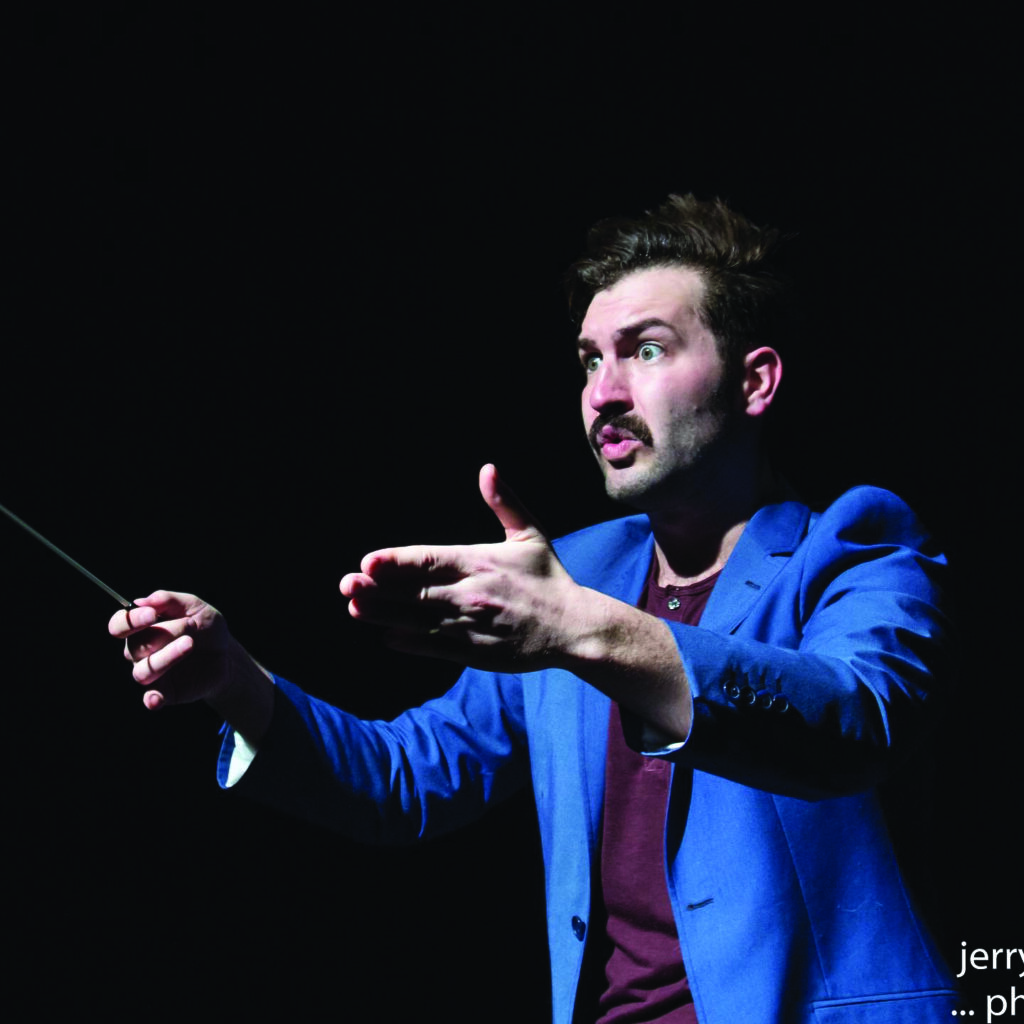
“Living there was scary at first,” he said. “I didn’t even have an iPhone. I remember MapQuesting how to get places, trying to figure out the buses and trains.”
One of those first rides downtown became a quiet turning point.
“I was freaking out on the bus, just anxious about everything,” he said. “And a guy in a wheelchair got on. I had my notebook with me, and I just remember writing, ‘What am I scared of?’”
That simple question, paired with the visual reminder that other people were carrying far heavier burdens, took some of the air out of his fear.
But the biggest shift came when he actually stepped into his first Second City class.
“I thought I was about to walk into a room full of young Bill Murrays and Chris Farleys and Gilda Radners,” he said. “And I learned very quickly that not everybody thought about it the way I did.”
Some people were there to pad their résumé. Others just wanted to be better at public speaking or more comfortable socially.
“There were very few who were there because of the legacy and the love and passion of this theater,” he said. “That was a huge thing, realizing all these places that seem unreachable or untouchable are mostly just places we’ve put on a pedestal in our heads.”
Chasing SNL, and finding something else
Second City’s conservatory program became Barron’s proving ground. He auditioned in, re-auditioned halfway through, and eventually helped create a revue in the classic Second City style — improvised in front of an audience, then rewritten and refined into a full sketch show.
After that show, he was invited to audition for a cast that performed on Norwegian Cruise Line ships. He spent two eight-month contracts on the water, performing improv and sketch for vacationing crowds.
“It was a big step in that hierarchy,” he said. “Typically, you do a touring company or ship, and from there you hope to get on one of the main stages, where Lorne Michaels and people from SNL come see shows.”
He submitted tapes for Saturday Night Live twice, stringing together original characters and bits for casting to consider — his shot at that childhood dream.
“Bill Murray said Second City is the place where most people go to realize they’re not meant to do this,” Barron said with a laugh. “He’s right. It’s brutal. But it’s also where you figure out who you are.”
Over time, his goal shifted.
“Of course being on SNL would be amazing,” he said. “But I’ve heard it described as the worst job everybody wants because of how taxing and stressful it is.”
Now married with two daughters, he sees that dream differently.
“If I didn’t have kids right now, yeah, 100 percent I’d still try,” he said. “Today, it’s still a goal to host someday — that would be cool. But I’m not actively choosing my actions based on getting on the cast anymore.”
Finding his voice, and his people
After he got off the cruise ship, Barron dove into Chicago’s indie theater scene. One of the first shows he saw was a sketch show called Bye Bye Liver at the Public House Theatre. Soon he was invited to audition for the ensemble, and the theater became his lab.
“On the ship, I was doing a lot of improv and material other people wrote,” he said. “At Public House, I could write and put on my own shows. I put a lot of variety shows together. That’s the experience I needed to figure out who I was not just as an actor, but as a writer.”
He was on stage nearly every night for five or six years, trying new things, bombing, tweaking. That grind led to one of the most practical lessons of his career.
“One thing they say in the acting industry that I find very true is ‘work begets work,’” he said. “The more you do, whether it’s big or small, the more it attracts more work.”
For a long time, he assumed an agent would eventually “discover” him in a show. Then he decided to get intentional.
“I finally thought, ‘What can I do to actually pursue getting an agent?’” he said. “My résumé looked really good after five years in Chicago. So I made it a goal to get an agent.”
He researched every agency, looked up their clients, asked people he knew to recommend him, and sent submissions everywhere.
“From day one to day nine, I had three people reach out and already had one meeting,” he said. “On day 11, I signed with an agent. It was nuts.”
That relationship opened doors to auditions for Chicago Med, Chicago Fire, Chicago P.D., Fargo, Adult Swim shows, commercials, and indie films.
One of his favorite projects was an Illinois Lottery commercial directed by Jared Hess, the filmmaker behind Napoleon Dynamite and Nacho Libre.
“It was the weirdest audition I’ve ever done,” Barron said. “I had to get down on my hands and knees, act like there was a goat on my back, look up at it and tell it ‘Namaste.’ Then they had me fake juggle. I walked out thinking, ‘What am I doing? This isn’t what I went to school for.’”
He got the call back. Then the job.
“It ended up being one of the funnest things I’ve ever done,” he said. “It was airing during Saturday Night Live and sports games — the biggest project I’d had that the most people saw. And I didn’t even realize it was Jared Hess until the final hour of the shoot.”
Another throughline came from home. Before leaving Owensboro, he’d created a quirky character and filmed a YouTube series called “Owensworld.” Years later, a filmmaker saw Barron in Bye Bye Liver, then looked him up online.
“He found that character,” Barron said. “And it was because of that YouTube series that he reached out. I did his film, then the director of photography on that film cast me in his film, then the assistant director wrote a short and gave me the lead.”
Piece by piece, the web of collaborators grew.
“You begin to work with people who are actually putting these things together,” he said. “Once the right people know who you are and know you work well together, they keep calling.”
Why it matters
Ask Barron whether he prefers acting or comedy, and he doesn’t separate them.
“They go hand in hand,” he said. “A lot of my chops as an actor are comedic.”
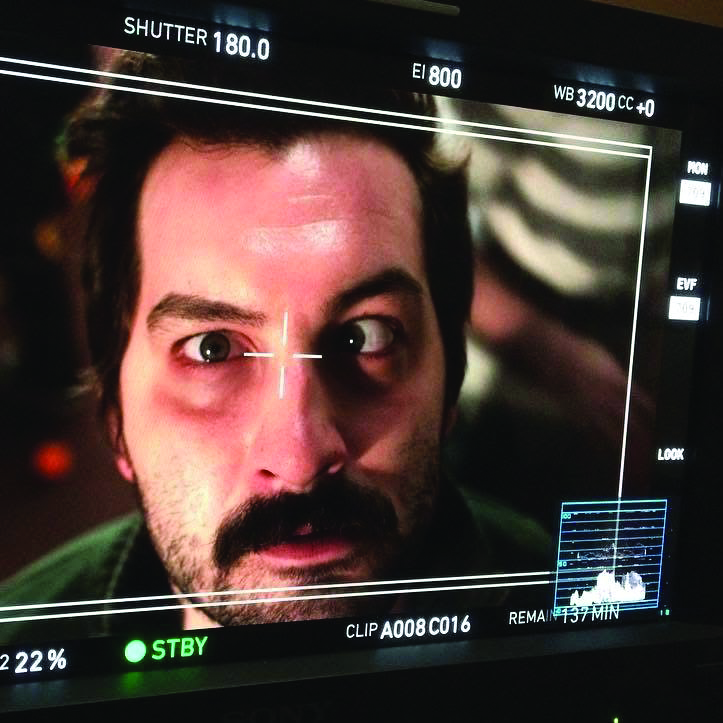
He’s never seen himself as a traditional standup comedian. His work is more character-driven, more Andy Kaufman than mic-and-stool. Still, there’s a clear hierarchy in his heart.
“If I have to pick between being on camera or being on stage in the moment, I absolutely love being on stage,” he said. “I love the audience and making them feel something, whether it’s laughter or whatever it is. I just want them to feel something.”
The on-camera work has its own reward.
“With acting on camera, especially dramatic roles, what I like is that they live there,” he said. “You’re not getting that immediate reaction, but then you get to sit and watch it with your mom. That gets its own feeling, especially when you know how much she’s done to support you.”
His heroes — Robin Williams, Steve Carell, John Belushi — shaped how he thinks about it all.
“They’re people who do comedy so well but are incredible at transforming into different characters, even scary or really dramatic ones,” he said. “The best comedians are really good actors. Even if they’re doing something absolutely absurd, they’re being honest to the character. They’re not trying to be funny.”
That honesty became a kind of north star for him — on stage, on set, and eventually offstage too.
Lessons in letting go
Two big lessons rise above the rest when Barron looks back.
“The first is what we talked about — putting things on a pedestal,” he said. “Second City, casting offices, big auditions. Once you’re actually in the room, it’s never as massive as it is in your head.”
The second might sound harsh, but it’s freed him.
“Honestly, nobody cares,” he said. “You walk into these rooms thinking, ‘It’s all on this moment.’ But you’re either right for the role or you’re not. When you don’t get it, 99 percent of the time it’s not because you did anything wrong. You just weren’t right for that role. The quicker somebody in this career can learn that, the better. Then you’re not walking in desperate, and you don’t waste energy obsessing over an audition after it’s done.”
Eventually, Barron and his wife, also an actor, made the decision to move back to Owensboro. After COVID, most auditions shifted to self-tapes. Callbacks often stayed virtual. But the move was about more than logistics. The couple now has two daughters, 8 and 3, and Barron wanted a different rhythm.
“I feel like I’m on a hiatus from pursuing acting in the way I was for so long,” he said. “I want to be in my girls’ lives and a part of it as much as possible.”
Instead of chasing every audition, he’s pouring energy into things he can build and shape.
He co-hosts a podcast with his brother for the CCIM Institute, a commercial real estate organization. That side project unexpectedly turned him into “a little celebrity in the commercial real estate world,” leading to a trip to Vancouver where he emceed an event for them.
Closer to home, he’s become a go-to emcee for events, including local fundraisers like the St. Benedict’s/Pitino Shelter event, where his blend of humor and heart helps raise money for people in need.
And he hasn’t stepped away from film. A longtime collaborator from his Chicago days is committed to making at least one movie a year and almost always writes a role for Barron.
“It’s like Martin Scorsese and Robert De Niro,” he said, quickly adding, “Not in the quality of movies we make, but in how we work together. Whatever he does, he’s writing something for me — whether it’s the lead, supporting or comic relief. I know I’ve got that outlet with acting.”
Peace with the path
If the nervous kid in Starbucks was chasing one very specific dream — get to Second City, get on SNL — the man sitting in Owensboro today is working from a different compass.
“To me, a goal has always been about a specific objective that has yet to be achieved,” he said. “I feel like I was trying to come up with an answer through that lens.”
But somewhere between the church stage, the cruise ships, the small theaters, the casting rooms, the commercial sets, and the flights home, the lens shifted.
“Today, my goal is not about what I don’t have,” he said. “My goal is to appreciate what I do have. It’s to give my full focus and energy to the task at hand. Through that lens, there’s more room for gratitude. And when there’s gratitude, my best is almost always better.” OL