


Photos & Article by Meghann Richardson & Christy Chaney
Craving a change of scenery? In each issue of Owensboro Living, we’re setting our sights beyond city limits and inviting you to come along. Whether it’s a charming small town a few hours away or a scenic destination across the country, think of this travel section as a road trip with a friend who shares your love for good food, unforgettable views, and unique local flavor — just like we do here at home.
We thought we were taking a quick weekend trip. A direct flight out of Nashville, a hotel in the French Quarter, a loose plan to eat well and wander wherever the music pulled us.
New Orleans had other ideas.
Some cities give you a vacation. New Orleans gives you an experience, one that unfolds slowly, like the curve of the Mississippi River it was built around, revealing layers of history, culture, and soul at every turn.
One minute we were drifting down Bourbon Street, the sound of live brass floating through open doors. The next, we were standing quietly in St. Louis Cemetery, pressing 13 pennies into the tomb of Marie Laveau, the city’s legendary Voodoo Queen, hoping the stories about good fortune might be true. Before we knew it, powdered sugar dusted our clothes at a café so iconic even its imitators won’t dare claim to be better.
This is a city where the party never ends.
Following the Curve of the Crescent City
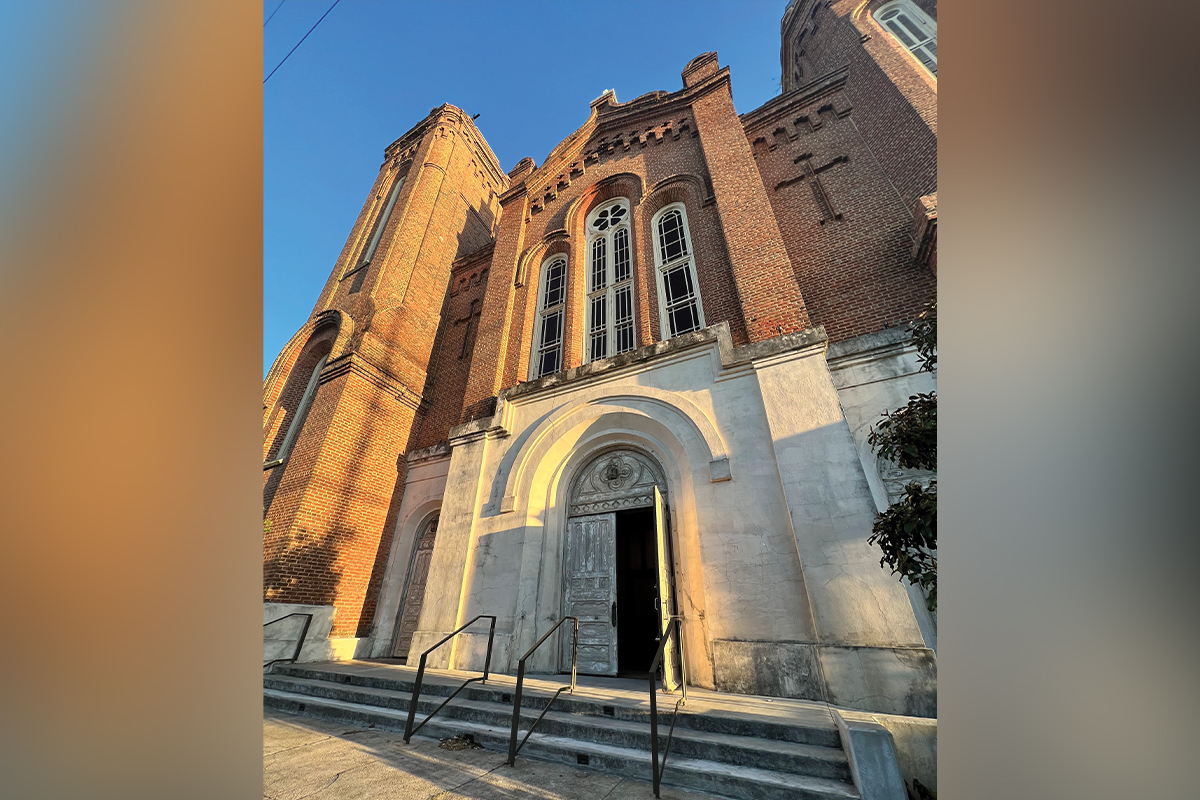
New Orleans is known as The Crescent City, a name born from the way its original settlement curved along the Mississippi River. Founded in 1718 by Jean-Baptiste Le Moyne de Bienville, the city was designed as a military-style grid. The first 13 blocks, now the heart of the French Quarter, sit right on the river’s edge, forming the historic core of the city.
By staying on the East Bank, we were positioned in what locals call the “Sliver by the River.” This was the perfect base to explore. Everything we wanted to see and taste was within walking distance, and every stroll brought something unexpected, a hidden courtyard, a street performer, or a building that looked like it had stepped straight out of a history book.
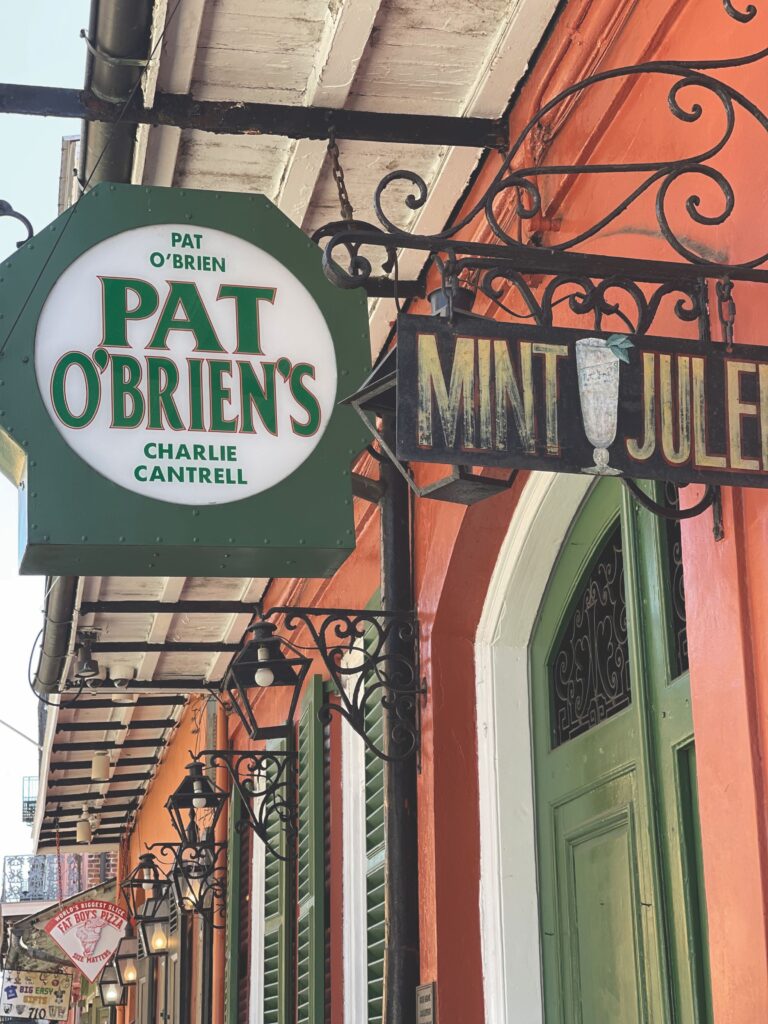
As you walk, you’ll notice two types of balconies: the early French wrought iron (hand-forged and delicate) and the later Spanish cast iron (heavier and more ornate), which gives the city its famous “lace” appearance.
The Women Who Shaped the City
One of the most powerful parts of our trip was learning about the women whose stories are woven into New Orleans’ fabric.
In the Treme neighborhood, we visited Dooky Chase’s Restaurant, where the legacy of Leah Chase still lives on. Known as the Queen of Creole Cuisine, Chase didn’t just create unforgettable food, she created a space where civil rights leaders gathered. Her influence was so great she became the inspiration for Disney’s Princess Tiana. And after tasting that fried chicken, we understood why.
At St. Louis Cemetery No. 1, we stood at the resting place of Marie Laveau, whose life remains wrapped in mystery and folklore. To some, she was a terrifying Voodoo Priestess; to others, she was a compassionate nurse and herbalist who cared for the sick during yellow fever outbreaks. The truth likely lies somewhere in the blur between legend and reality, but there’s no denying her impact on the city’s culture.
Another stop that stayed with us was William Frantz Elementary School, where a bronze statue honors Ruby Bridges.In 1960, at just six years old, Ruby walked past a screaming mob and through those front doors, becoming the first African American child to integrate the school. Standing there, it was impossible not to feel the weight of history, and the strength of a little girl who helped change it.
A Living Museum of Architecture
New Orleans feels like an open-air museum only warmer, louder, and far more colorful.
As we wandered, we passed Creole cottages with their high-pitched roofs and vibrant shutters sitting side-by-side with grand historic mansions that whispered of Gilded Age opulence. We marveled at the classic shotgun houses, those narrow, colorful dwellings so iconic to the city, and the stately Greek Revival facades that anchor the corners of the busier thoroughfares. In the French Quarter, the Spanish Colonial influences are impossible to miss, particularly in the heavy stucco walls and the legendary wrought-iron balconies. These balconies aren’t just architectural features; they are hanging gardens, overflowing with lush ferns and trailing jasmine that perfume the air.
We quickly learned the best way to take it all in is on foot and even better with a guided walking tour that fills in the stories behind the stunning facades.
Eating Our Way Through History
If New Orleans has a love language, it’s food.
We tackled po’ boys first, crispy French bread stuffed with fried seafood or slow-roasted beef swimming in gravy. Domilise’s and Parkway Bakery & Tavern lived up to every bit of their reputations.
Then came the muffuletta at Central Grocery & Deli, the birthplace of the legendary sandwich. Layers of cured meats, provolone cheese, and tangy olive salad stacked high on round sesame bread made for a messy, perfect lunch.
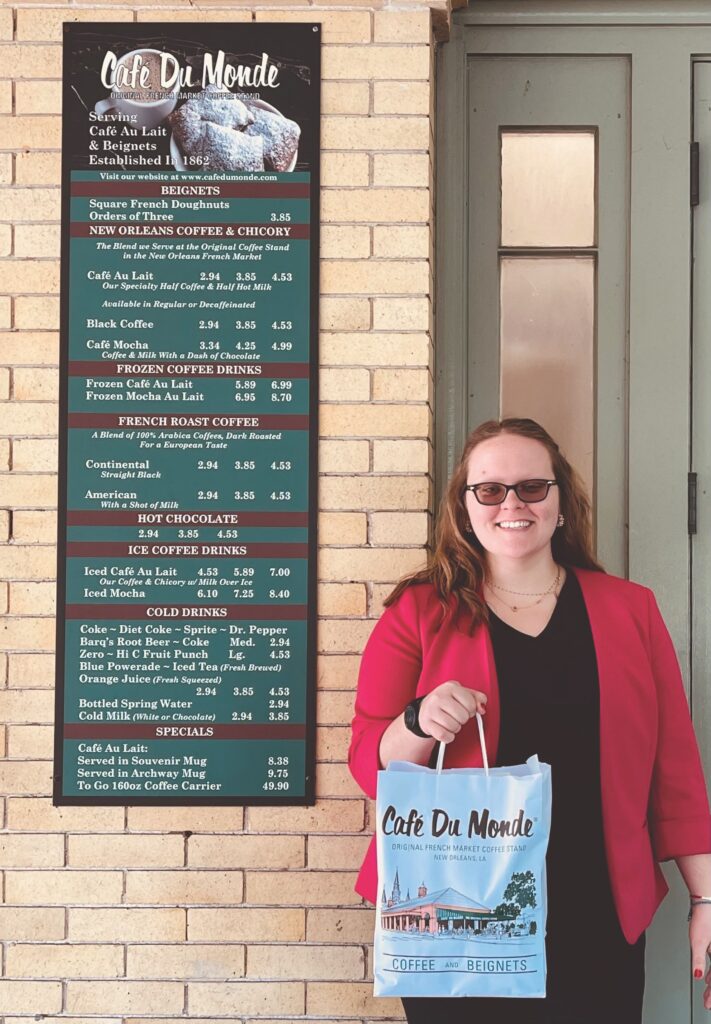
And of course, Café du Monde. Warm beignets arrived three to a plate, buried under powdered sugar like edible snowdrifts. Paired with a café au lait it was pure New Orleans.
We sampled our way through Creole classics too, rich gumbo, spicy jambalaya, and buttery étouffée at spots like Mother’s, Coop’s Place, and Coterie. Everywhere we went, the food felt like tradition passed down through generations.
More Than Just a Party
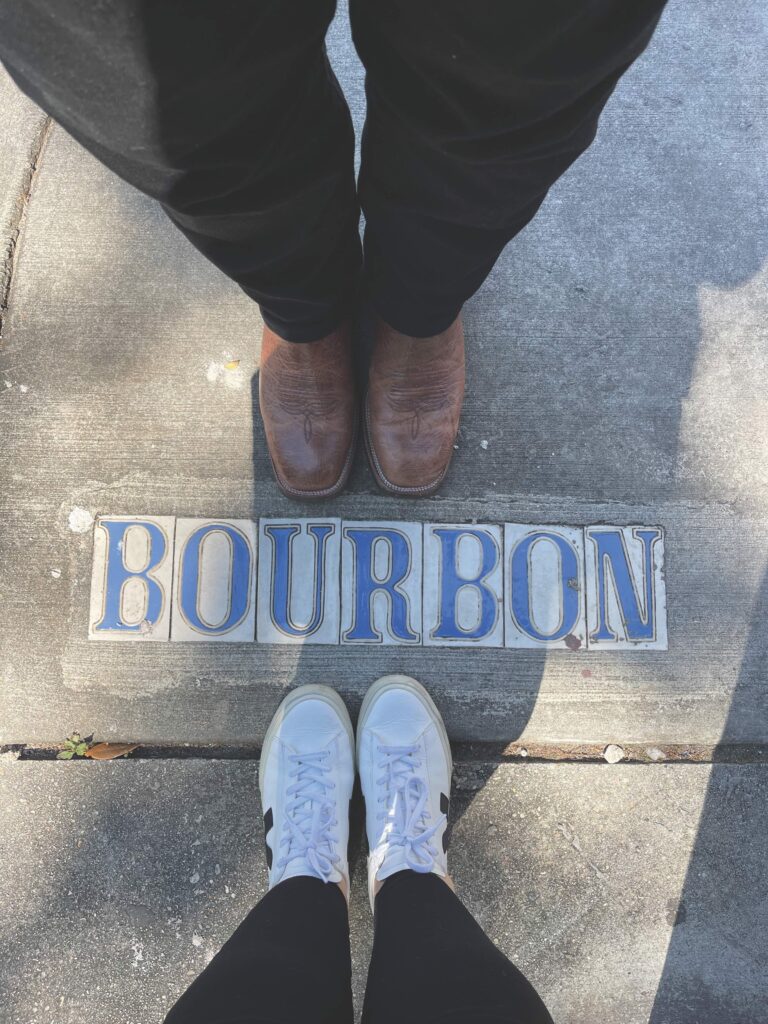
Yes, we danced down Bourbon Street. We heard live jazz spill into the night air. We soaked in the energy that never seems to slow.
But what surprised us most was how much depth New Orleans holds beneath the celebration.
It’s a city built on stories of resilience, culture, struggle, creativity, and joy. A place where history feels close enough to touch and where every meal, building, and song carries meaning.
We came for a quick weekend, but we left with a deeper appreciation for a city that refuses to be just one thing.
New Orleans isn’t simply a destination.
It’s an experience. OL