

Photo by Jason Tanner
On a busy summer night downtown, with music drifting across the riverfront and people weaving through the crowd, a small, simple sign stands out. It doesn’t advertise a product. It doesn’t promote a cause. It doesn’t ask for money. It just says one word: prayer.
For Chris Joslin, that word is less about preaching and more about permission — permission to pause, to talk, and to admit that life is heavy sometimes.
“The Prayer Stand is really just an excuse to start a conversation,” Joslin said. “It opens the door.”
A QUIET INVITATION
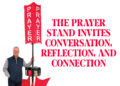
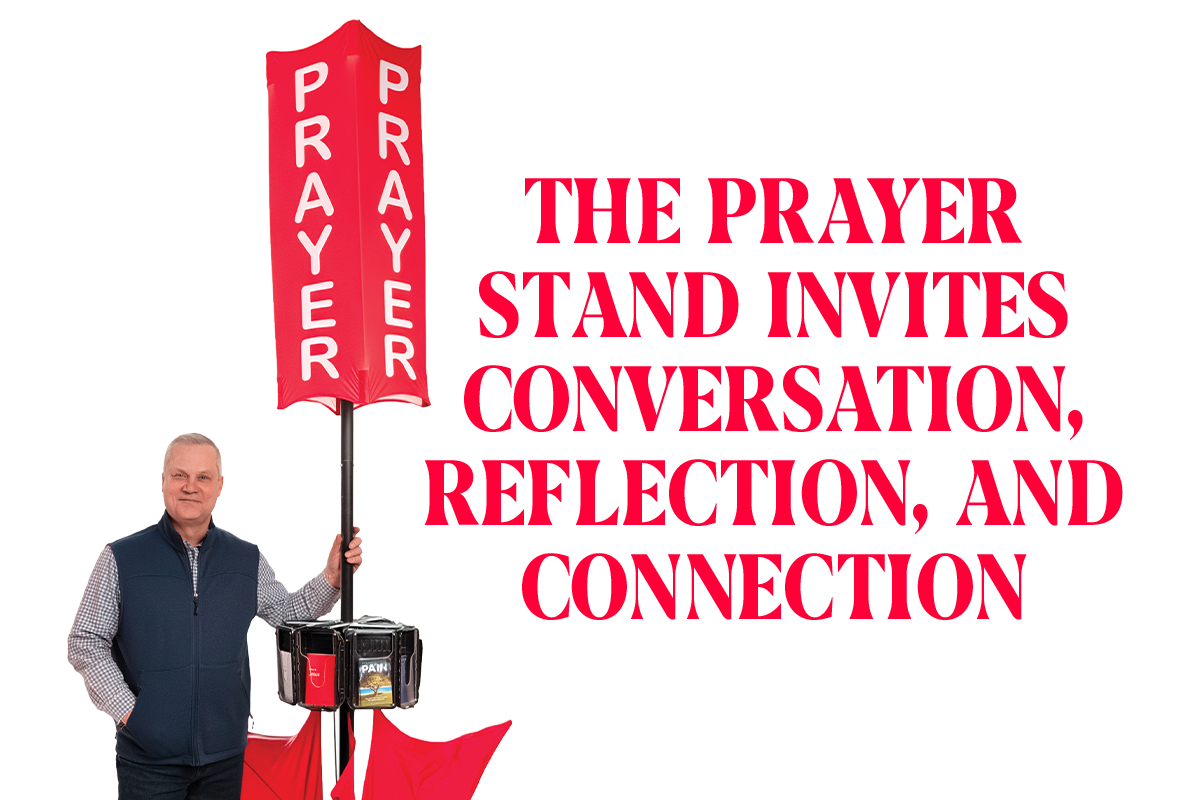
The Prayer Stand itself is intentionally uncomplicated: a portable, eye-catching structure designed to be set up anywhere people are already gathered. Joslin brings it to events such as Friday After 5, Fourth of July celebrations, air shows, farmers’ markets, and occasionally indoor spaces such as assisted living facilities, with permission.
He doesn’t wait for people to approach him. Instead, he gently asks passersby a simple question: Do you have any needs I can pray for today?
“Some people walk right past,” he said. “Some stop just to be polite. But a lot of people are carrying things — stress, grief, anxiety — and when someone sincerely asks, they’re willing to talk.”
What follows isn’t scripted. Sometimes it’s a brief moment. Sometimes it turns into a longer conversation about family, purpose, or what someone is struggling with at that point in their life.
“Prayer is not offensive, and with this simple question, walls come down,” Joslin said. “People open up and share about their concerns, struggles, and challenges. And many experience, maybe for the first time, someone showing them the love of Christ, meeting them right where they are.”
Joslin said he is a member of First Baptist Owensboro, but his emphasis is not on denominational doctrine.
“I’m not a preacher,” he said. “I’m just a Christian who wants to listen, pray, and encourage people to think more deeply about faith.”
Occasionally, people ask if they can tip him or offer money. He always declines.
“That’s not why I’m there,” he said. “If anything, I want people to feel like this is a gift, no strings attached.”
He does keep small pamphlets on hand, but they’re meant to support conversations that are already happening, not replace them. Some address common questions people raise: whether the Bible is reliable, whether Jesus was a real historical figure, or what Christianity actually teaches at its core.
“My job isn’t to have all the answers,” Joslin said. “It’s to show compassion, pray, and encourage people. I have a Biblical worldview, so naturally I encourage people to read the Bible and to draw their own conclusions about the truth of Christianity. ”
FROM DISCOVERY TO LEADERSHIP
Joslin discovered the concept of the Prayer Stand about 5 years ago while looking for more natural ways to talk about faith in public spaces, especially with younger generations who may not have grown up with any religious background.
He learned about the idea from Tom Kiser, who developed the Prayer Stand while doing ministry work in New York City, including Times Square. Joslin ordered a stand, began using it regularly, and eventually formed a friendship with Kiser.
When Kiser retired from leading the effort about a year and a half ago, he encouraged Joslin to take it on.
Today, Joslin leads Prayer Stand International, fabricating and distributing stands to individuals, churches, and organizations across the country, with several hundred in use nationwide. He has plans to grow the ministry to expand the impact of this evangelism tool.
“Many are beginning to realize that if this generation isn’t going to church, then the church must go to them,” he said. “The Prayer Stand is a powerful resource for engaging people right where they are.”
While the stand itself is simple, Joslin says using it effectively takes practice. One of the ministry’s growing focuses is training, helping people feel more comfortable starting conversations they may have avoided before.
“For a lot of Christians, engaging strangers about faith feels intimidating,” he said. “But like anything else, repetition builds confidence.”
Over time, he’s noticed patterns in the conversations that emerge. Most people aren’t hostile, he said, but many are skeptical or unsure what they believe. Political division and cultural tension often surface indirectly, though Joslin makes a point to keep conversations personal rather than abstract.
“It’s easy to talk in generalities,” he said. “But once someone asks you to pray for them, it becomes personal very quickly.”
Many of those who stop tend to be younger — teenagers through their 30s — a group Joslin believes is still actively wrestling with big questions of identity, purpose, and meaning.
“They’re asking, ‘Why am I here? What’s my purpose? Is this all there is?’ They may not be asking those questions in a church, but they’re asking them,” he said.
ONE CONVERSATION AT A TIME
Joslin is careful not to measure success by numbers. While he’s seen powerful moments, he views those as exceptions, not expectations.
“If all that happens is someone feels heard for five minutes, that matters,” he said. “If they walk away thinking a little differently, that matters too.”
As he looks ahead, Joslin hopes to grow the ministry by placing more Prayer Stands in more communities and spending more time training others to use them thoughtfully and respectfully.
“The goal isn’t to win arguments,” he said. “It’s to have honest conversations, show compassion, and meet people where they are.”
For many passersby, it’s just a brief interaction on a busy day. For others, it’s the start of a longer journey. Either way, it begins the same way — with a small sign, a simple question, and the willingness to stop and talk.
Learn more about this ministry at prayerstand.com. OL